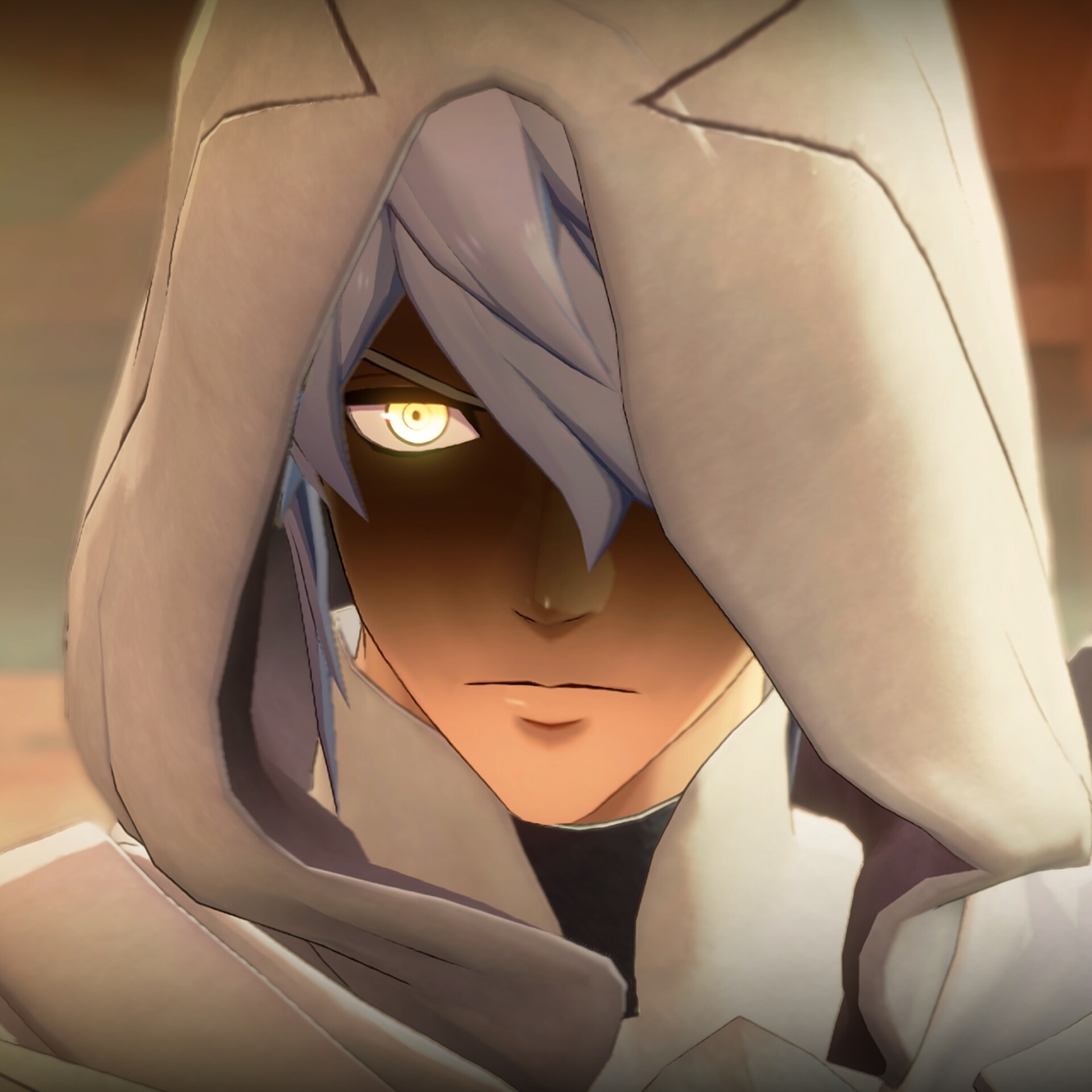




Initially, the most surprising thing about Fire Emblem: Fortune’s Weave is the appearance of a laser gun.
The game’s opening moments bring to mind the Zonai technology of recent Legend of Zelda games. It isn’t what I expected from Fire Emblem, but it immediately signals a shift in scale and ambition. It’s a long way from Fire Emblem: Three Houses, which begins in the relative intimacy of a monastery, with a newly appointed professor meeting their students for the first time.
Despite the initial sci-fi framing, Fire Emblem: Fortune’s Weave is, at its core, a swords-and-sandals epic, complete with heroic warriors, coliseums, massive battles and a to-do list that can feel overwhelming. If the 2019 Switch hit was a riff on Harry Potter, Fortune’s Weave‘s setting takes its cues from Ben-Hur and Gladiator. Laser guns are the last thing to worry about.
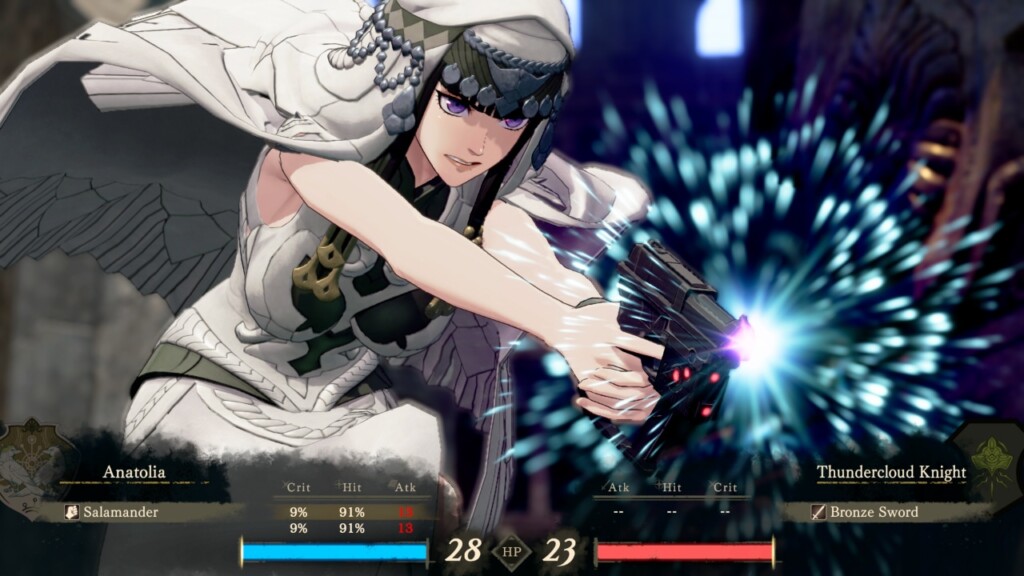
And overwhelming is definitely the word for the game’s first 10 hours. Almost every action brings a tutorial pop-up, explanation or new system to learn. It reminds me of Xenoblade Chronicles X, another game that onboards players with an onslaught of information. To its credit, Fortune’s Weave explains its systems concisely and clearly, then tucks them away for future reference. Its menus are much cleaner and easier to navigate than those of Three Houses, despite having even more to contain.
Then, at some point – another five hours in, perhaps – the leash is loosened. The game’s calendar, progression systems and various loops finally become familiar. Eventually, you stop worrying about what you’re supposed to be doing and start deciding what you want to do.
And from there, boy does the game blossom.
Let’s start with the structure of Fortune’s Weave, which puts an unusual spin on the typical three-act narrative.
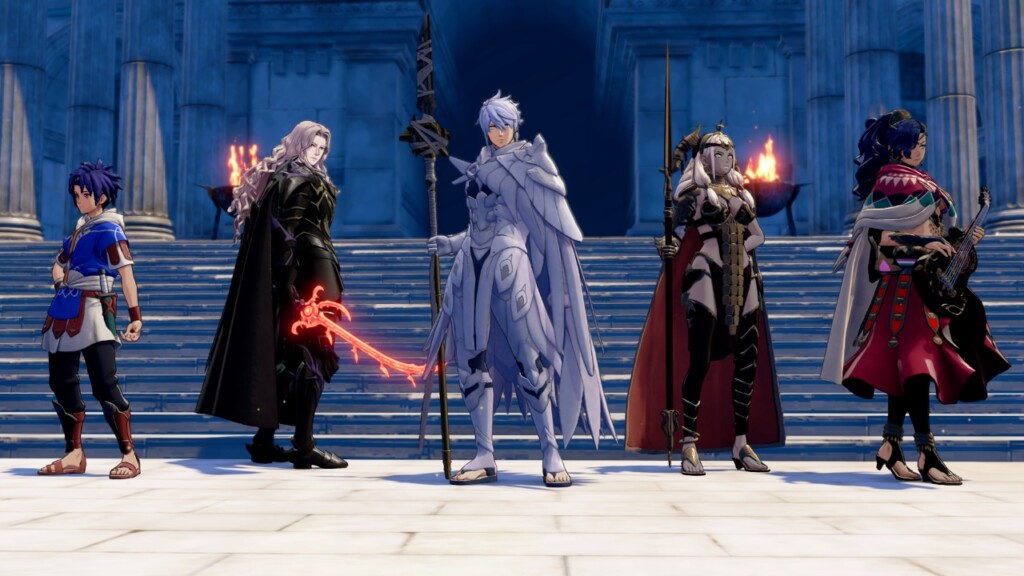
The first part puts you in control of four Flame Lords – Cai, Dietrich, Theodora, and Leda – as they pursue victory in the Heroic Games, a gladiatorial-style tournament held in Dagsion, capital of the Dagdan Empire. You can play through each character’s story individually, either in sequence (which I recommend) or by flitting between them in parallel.
Their elaborate journeys would be enough for most games, but here they’re just the beginning. Eventually, the Flame Lords become support characters for your own player-created protagonist, who oversees events from afar with occasional interventions. The game’s second part depicts the central conflict and events that set this time-bending adventure in motion. The third then hands control to your protagonist, with the four Flame Lords in support as you attempt to rewrite history and banish the forces of evil. Happily, it sounds considerably more complicated on paper than it is in execution.
The narrative destination isn’t particularly original, but what marks Fortune’s Weave out is this intricate, systems-driven journey. The complexity of its construction is remarkable, and watching the tangled strands of its story and mechanics gradually come together is something special.
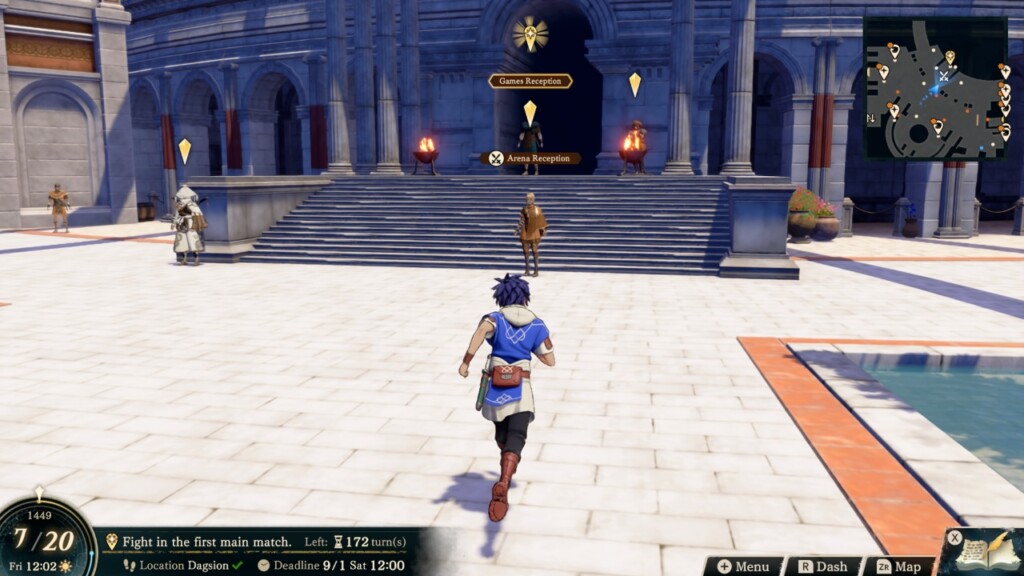
A game of this scale is impressive, but it can also be dangerous. (Say hello, Starfield.) One of the pleasures of Three Houses is the intimate domesticity that balances its overarching threat. You live alongside your classmates, teach them, fight with them, and watch their relationships develop through the relatable challenges of school life.
Fortune’s Weave takes a slightly different approach. The connections you forge between protagonists and support characters don’t necessarily create that same sense of kinship as Three Houses, but they’re replaced by an equally binding shared sense of purpose. Everyone has something to prove. And everyone is working towards the same overriding goal of winning the Heroic Games. It’s a different dynamic, but no less effective.
That’s no criticism of the characterisation either, which is strong throughout. The game’s leads are well drawn, each driven by clear motivations. And combined with the vividness of the narrative, they ensure that each separate Part I playthrough feels distinct and worth exploring to its fullest. Cai, the wide-eyed young hero, is probably the best character to start with. His youth and naivety making him a useful lens for the drip-feed of narrative worldbuilding.
The extended cast of party members and recruits is similarly appealing. Almost without exception, they are performed with gusto by a voice cast whose direction must occasionally have amounted to little more than “Go big!” It’s bold, it’s broad, and it works. The overall effect is less Harry Potter – thank goodness – and more akin to the grand animated adventures of the 1980s I used to adore. Shows like Dungeons & Dragons, Ulysses 31, and The Mysterious Cities of Gold. Like those childhood passions, Fortune’s Weave feels like one vast, episodic adventure, with a tangible sense of time passing.
As the game moves into its second part, the pace picks up and the stakes rise. Part II’s battles are largely shared between the four routes, so this is where you’ll hit the most repetition if you play all four heroes through. You can reach the final campaign with relatively little preparation if you choose, but the more heroes, recruits, and character development you bring, the more capable your army becomes, and the more Part III feels like a culmination of everything you’ve built towards.
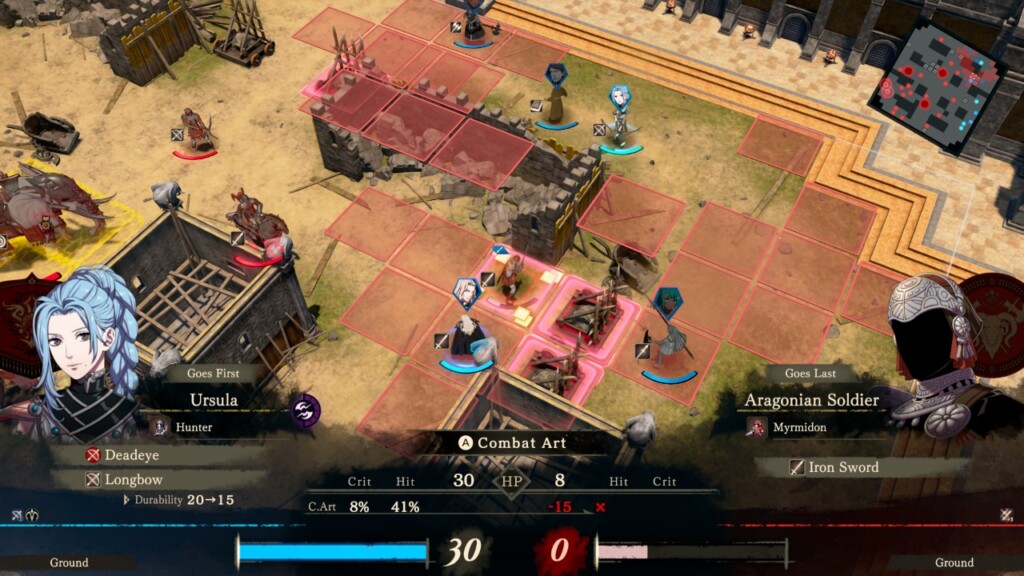
There’s an assumption that Fire Emblem players divide into those primarily interested in the story and characters, and those in it for the battles. I’m sympathetic to that distinction, but Fortune’s Weave makes a potent argument that it’s the connection between the two that gives the series its mojo. The story provides the battles with context, while the battles give the story momentum.
Fortune’s Weave goes far beyond those two modes, however. Between main battles, you’ll roam an ever-expanding map of the Dagdan Empire. Movement is limited by a number of turns, essentially four per calendar day, adding a light board-game layer of strategy as you forage for items, lure animals to use as mounts, take on sub-quest skirmishes, visit smaller towns, and clean out dungeons of loot.
Back in Dagsion, you stock up, build your support relationships, pay your respects to the gods, share meals, and prepare for the game’s main battles. Across the days and weeks, you have to weigh the turns you have remaining against the tasks you want to complete. The structure is flexible and you’re not punished for your choices, however. There’s always a shopping list of activities to complete, but never so much that the momentum stalls. Eking the most out of your time between the main battles becomes one of the game’s more compulsive pursuits.
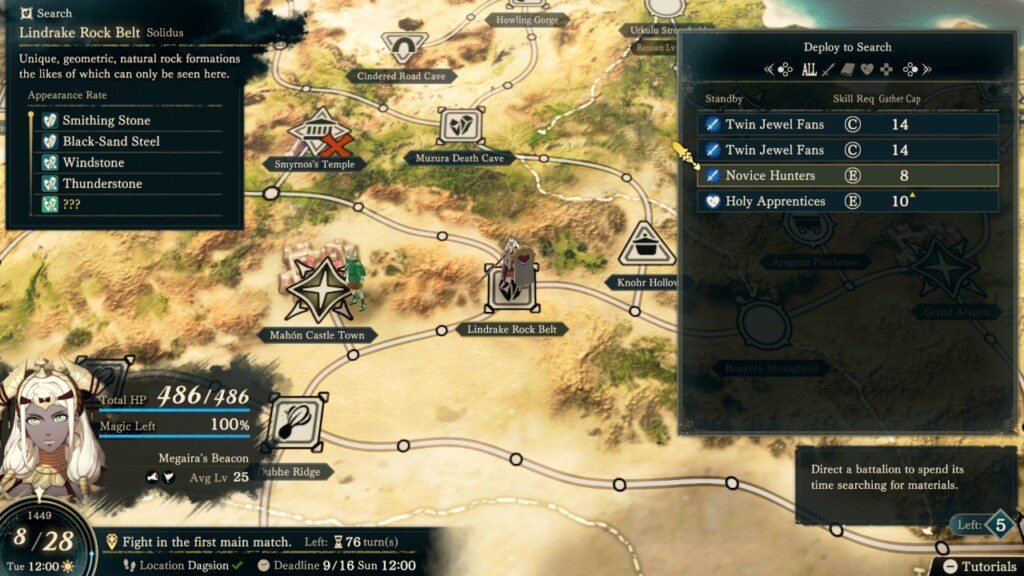
One notable addition to the gameplay mix is dungeons, which rework Fire Emblem’s traditional combat loop into team-based excursions. They can drag a little, but suit my habit of playing in short bursts in handheld mode when I have a few minutes to spare. Thankfully, the auto-battle option is useful if you’d rather blast through and collect the spoils.
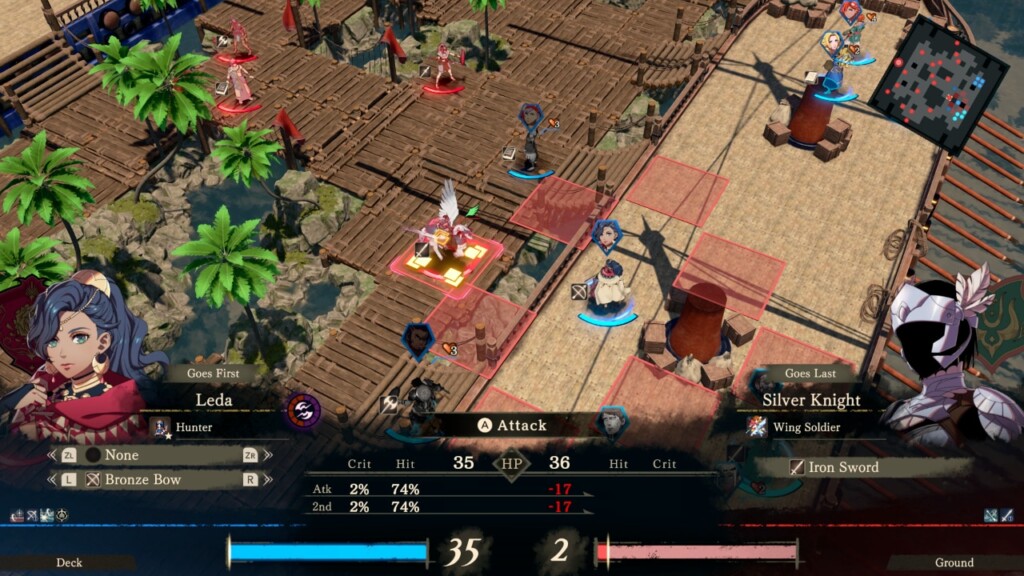
The main battles themselves provide plenty of variety. Some encounters pit you against waves of reinforcements on a shrinking battlefield; others hinge on a single high-value target or an environmental hazard that punishes careless positioning. The variety only grows from there as you move through the game’s second and third parts. The battles become larger, more elaborate, and give the game’s combat mechanics considerable room to shine.
Two systems do most of the heavy lifting in battle itself. Combat Arts are a series staple, and Fortune’s Weave doesn’t mess with a winning formula. Lean on them too freely and your weapon can break at exactly the wrong moment, leaving a favourite unit disarmed. Blaze Arts are the newer, riskier proposition. They’re a suite of offensive spells, buffs, teleports, and even monster summons, paid for not in durability but in a character’s own HP. It’s a neat risk-reward system that teases the constant temptation to end a fight in one spectacular, health-draining flourish. Of course, there’s always the chance you’ll bleed your best unit dry in the process.
So, there’s a lot here. And seeing everything the game has to offer will take time. My advice is not to rush it. Pace yourself and savour each character’s journey in full. Get comfortable with the calendar, the systems, and the various loops before worrying too much about optimising everything. Fortune’s Weave initially feels like a game that demands to be mastered. In reality, it’s a game that rewards simply living in it for a while. The strategic route is the scenic route.
Nintendo Switch 2 performance
Performance-wise, there’s not a great deal to report. Resolution and a 30fps frame rate hold steady in both handheld and docked play, loading is brisk, and there’s a clear jump in visual fidelity over Three Houses. A 60fps option would have been welcome.
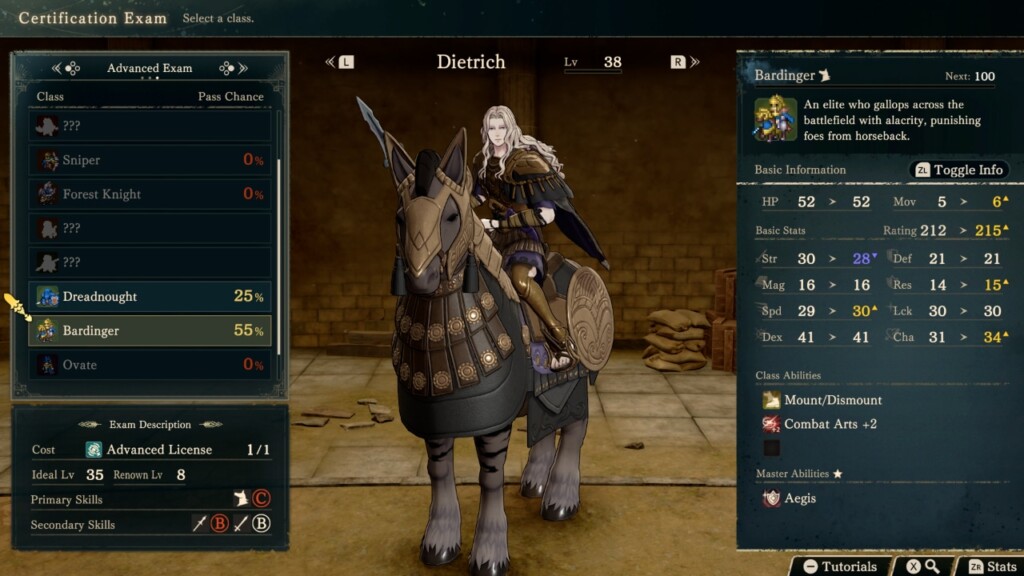
At first, Fortune’s Weave threatens to buckle under the weight of its own ambition. There are too many systems, too many characters, too many tutorials, and too many things demanding your attention. Its labyrinthine structure, multiple protagonists, flexible progression, and overlapping mechanics could easily have worked against one another. Instead, the game successfully weaves all of this into an experience that can flex according to player preference. It’s an extraordinary feat of structural design that still leaves plenty of room for the heart, soul, and relationships at the core of the franchise.
“Weave” is absolutely the correct moniker for the game. By its conclusion, its many threads have come together to form a single, enormous tapestry. The individual stories remain distinct, but together they create something much larger than any one of them could have achieved alone. The pleasure isn’t simply in any one mechanic or scene, but in stepping back and appreciating the scale of the whole.
Game: Fire Emblem: Fortune’s Weave
Platform: Nintendo Switch 2
Developer: Intelligent Systems
Publisher: Nintendo
Release Date: September 17, 2026