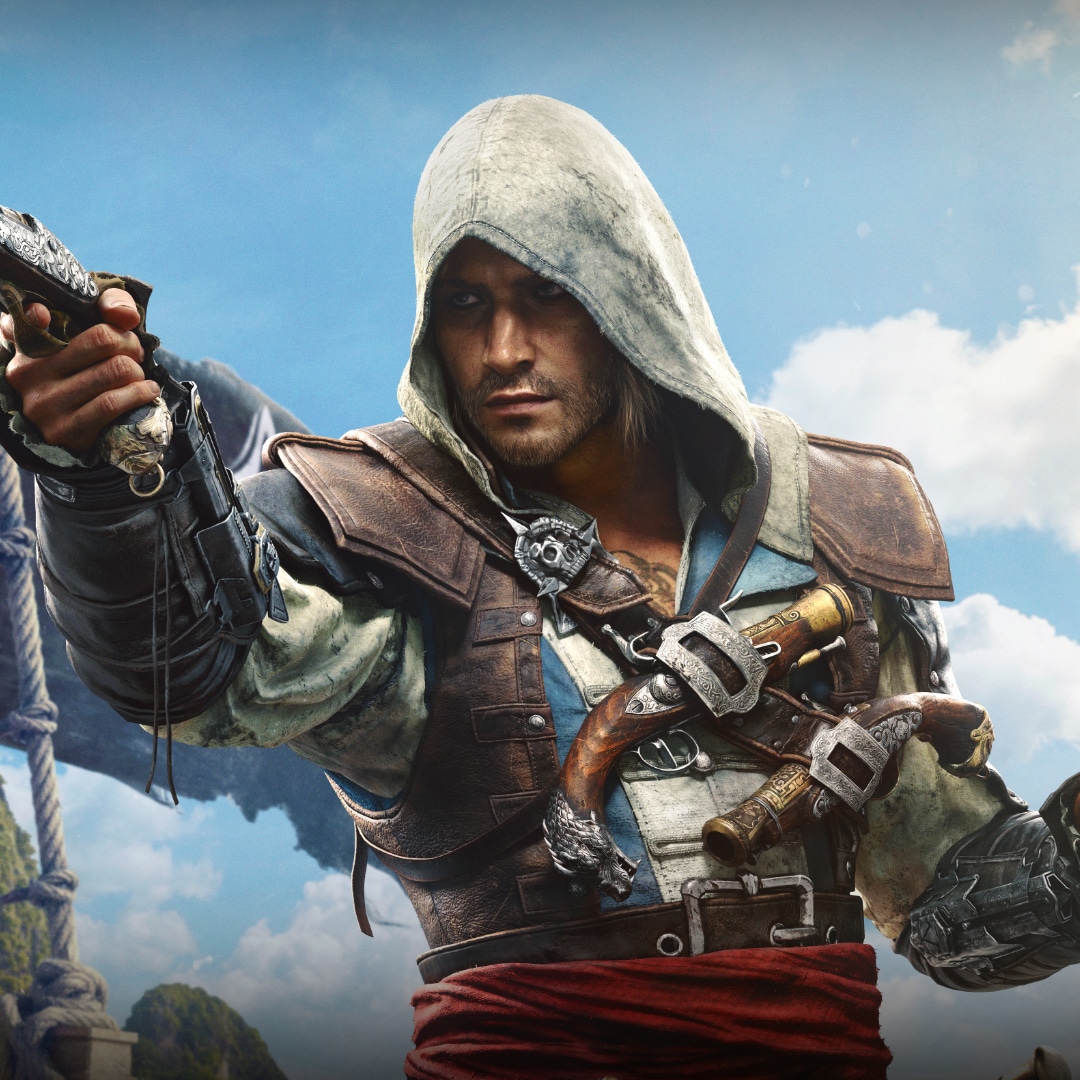




Assassin’s Creed Black Flag Resynced sets sail for the past with a fresh coat of paint, but does this lavish modernisation stay the course?
By 2016, the received wisdom was that Assassin’s Creed needed to change. After the run of Black Flag, Unity and Syndicate, and despite the different qualities of each title, the sense was that something had to give.
The mainline games since then – Origins, Odyssey, Valhalla and Shadows – have traded the series’ more focused adventures for sprawling RPGs that could last all summer. The one title to break the pattern slightly was Assassin’s Creed Mirage, a solid enough game but one that fell between two stools in its attempt to honour the past while being built around the franchise’s more recent design conventions.
Mirage springs to mind as I play Assassin’s Creed Black Flag Resynced. Similarly, it’s a modernisation of a classic in the vein of The Ezio Collection and Assassin’s Creed 3 Remastered. But it’s also an attempt to bridge the past and future and significantly overhaul a fan favourite without losing sight of what made it special.
There’s a strong case that we’re overdue for an Assassin’s Creed game as focused as Black Flag, which, for all its seafaring exploits, is far more contained, both geographically and mechanically, than Valhalla or Shadows. Largely, the exercise is a success, but beneath the surface of its beautifully rendered waters, there are some tensions.
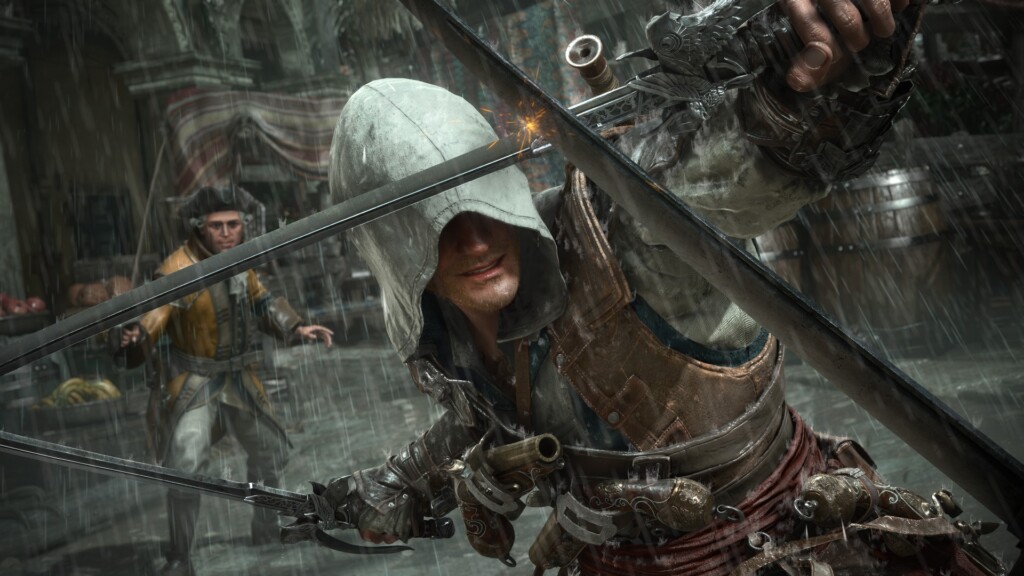
One immediate change is the removal of the original’s Abstergo scaffolding. This is made possible by the flexibility of its own conceit, the Animus. Endlessly reprogrammable by design, it lets this retelling of Edward Kenway’s tale drop the corporate framing like a mutineer tossed overboard. The Animus Hub – which launched with Shadows – returns with four new Rifts to experience, but it’s no replacement. Abstergo Entertainment’s presence allowed for some corporate satire to poke through the pirate fantasy, which Resynced, for all its polish, doesn’t attempt to replicate. Perhaps the removal of that meta layer is wise given Ubisoft’s ongoing layoffs, but it removes some narrative bite.
The absence of that strand doesn’t register immediately, though. The game’s opening hours cast an instant and beguiling spell thanks to its maximalist glow-up. The Caribbean now teems with wildlife and incidental detail. Life crowds every corner, fauna sways in the breeze, and driftwood floats by as you scramble ashore. From the grains of sand underfoot to the rolling seas you navigate aboard the Jackdaw, it’s almost overwhelming in its texture.
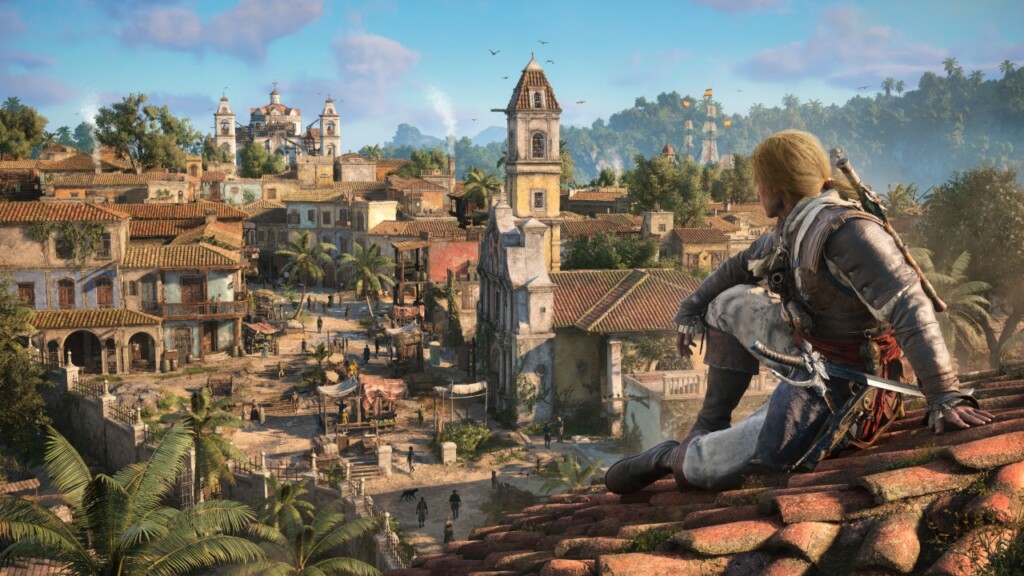
Black Flag Resynced is not just a visual makeover, however. Unlike the recent release of Star Fox, which gave a classic game an equally lush refresh but left the core mechanics untouched, Resynced tinkers with some of the game’s fundamentals.
The updated ship combat fares best and is improved across the board. It’s smoother and more spectacular, with additional secondary weapons that help it revel in its own bombast more than the 2013 version could manage. If there’s one place where Resynced unambiguously surpasses its source material, it’s here, cannons blazing, shipmates yelling and rain lashing. (Oh, the weather in this game. What a glorious soak.)
Other changes also impress. Additional score elements from Stephen Lukach weave seamlessly into Brian Tyler’s original soundscape without ever calling attention to themselves. And the enhanced resolution, frame rates and lighting all combine to create one of the most sumptuous games I’ve experienced in some time.
The ability to dive underwater at any point is the prime example of when this modern update works best. It adds texture rather than diminishing it, bringing the majesty, menace and mystery of Davy Jones’s locker vividly to life. It feels like a natural extension of the world rather than an intrusion from a newer design philosophy.
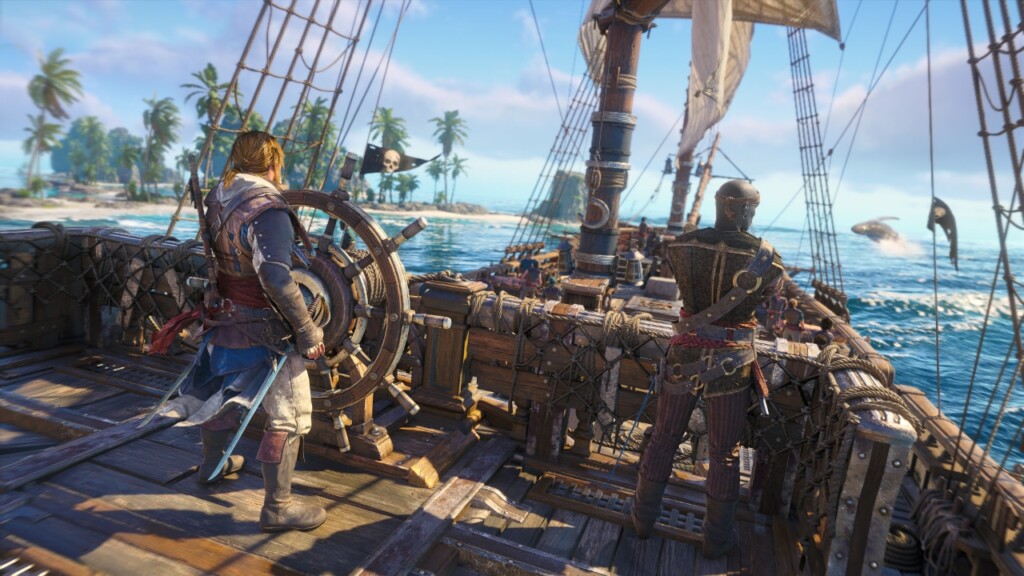
Resynced also adds several quests based around three newly introduced officers, alongside an entirely new chapter, A World Without Gold, which provides an enjoyable late-game excursion. Plus, there’s a smattering of additional side quests and contracts. This is definitely a game with an aversion to editing, but I don’t think its most ardent fans – me included – will complain too much.
And, of course, that wonderful cast of characters returns, led by Matt Ryan’s charismatic performance as Edward Kenway. Olivia Morgan brings the same sly energy to James Kidd that made the character such a highlight the first time round. Blackbeard, voiced by Mark Bonnar (yep, recently seen on The Celebrity Traitors), gets new scenes that carry surprising weight. And Stede Bonnet, played with deft comic timing by James Bachman, cements his place as one of the series’ best comic-relief characters. It’s lovely to see these actors return rather than being recast, and that continuity does as much work as any amount of new lighting.
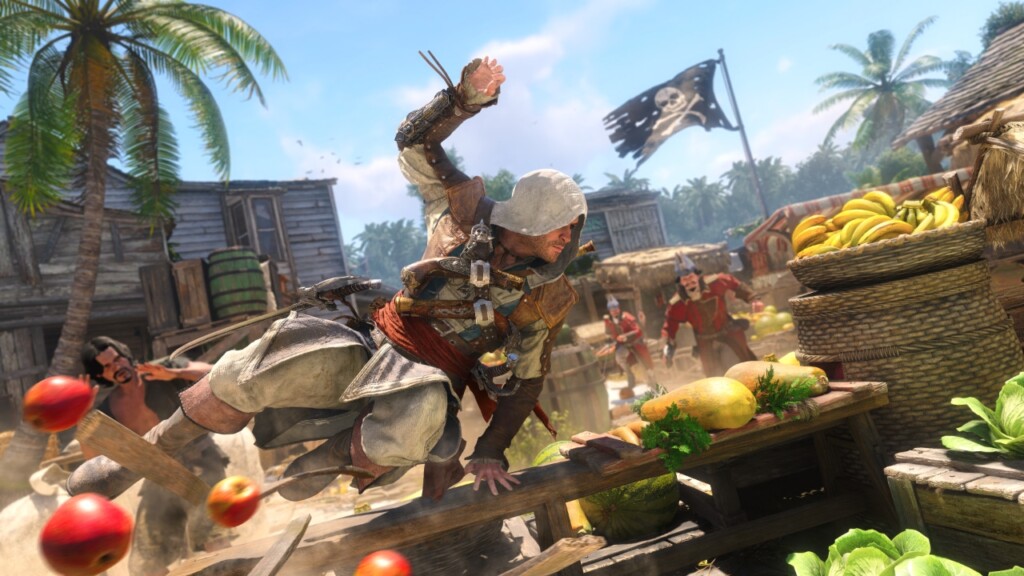
The result is a game that often feels fuller than the original, with more to see, much more to do and more detail packed into every corner. And yet, somehow, despite the aesthetic feast it presents, the game has a tendency to give with one hand and then take away with the other.
That’s clearest in the controls, which have been remapped to match the series’ more recent entries. That means sprint has been mapped to pressing L3, and the triggers – long associated in my muscle memory with propulsion, momentum and movement – are now mapped to combat, with the face buttons supplying modifiers and special moves. It’s a small change on paper and one to be expected, but in practice it never quite felt natural to me. New moves such as the sweep and kick look fantastic on screen, but on more than one occasion I’ve tangled my fingers and somehow managed to pitch myself straight into photo mode instead of, say, knocking a foe overboard. I’m aware this is a me problem, so I’ll take the hit, but the old mapping felt so intuitive that I’ve never managed to override it. The ability to crouch anywhere, however, is a godsend.
The absence of a minimap is a more confounding change. It drains the experience, turning simple navigation and environmental awareness into a persistent source of friction. Over the twenty-hour campaign, the inability to get an instant sense of what’s around you gradually compounds into a frustration that the new directional HUD never fully addresses.
Another curious effect of the audio and visual enhancements is a subtle change in atmosphere. Amongst the swashbuckling hijinks, the original also found time for an emergent sense of melancholy and remoteness across the small islands dotted throughout the Caribbean Sea. Resynced‘s more vividly rendered world fills those spaces with activity, and with crabs constantly skittering away and gulls screeching overhead, there is less space and time for reflection.
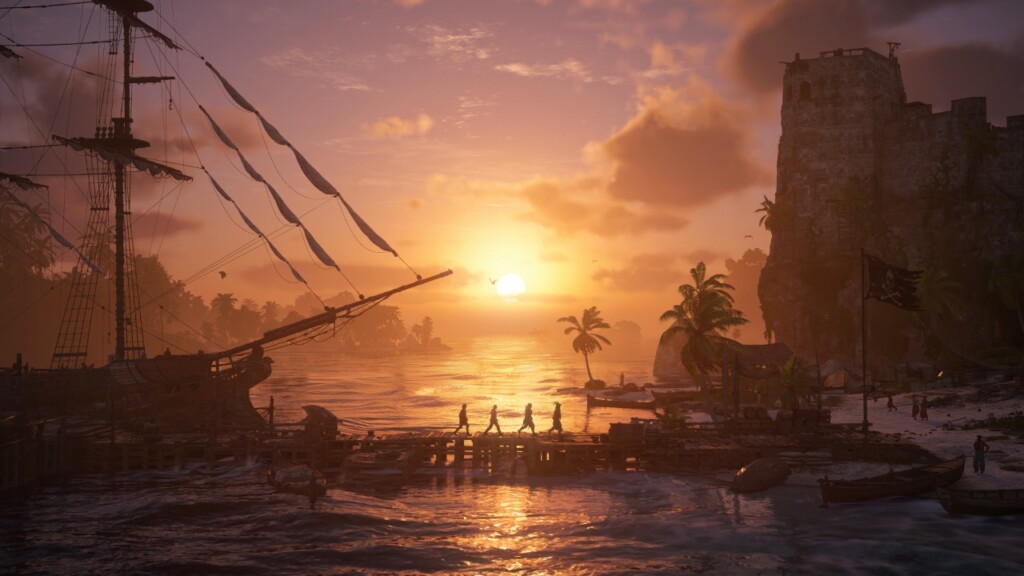
Ultimately, and thankfully, none of that stops this being a glorious adventure. It’s different, but rarely for the worse. The visual splendour, narrative additions and sheer technical audacity all come together to make a powerful impression, while the strength of its storytelling and some of the best missions in the series remain intact, and in many cases refined.
I’d hesitate to call Resynced a replacement for the original, and I say that having gone back to it recently. Not every thirteen-year-old open-world game survives a modern replay intact, but Assassin’s Creed IV: Black Flag holds up remarkably well. And it still exists. Ubisoft has confirmed that it will remain available alongside Resynced, which makes this a much easier recommendation.
Where Mirage struggled to reconcile the series’ past and present, Resynced just about pulls it off by trusting the strength of the source material. It’s further proof that this series is at its best when it narrows its focus and puts its faith in well-written and well-acted characters. Some of that old magic is swallowed by spectacle and frayed by fussiness, but most of what made Black Flag great survives its voyage to the modern age.
Game: Assassin’s Creed Black Flag Resynced
Platform: PC, PlayStation 5, Xbox Series X|S
Lead Developer: Ubisoft Singapore
Publisher: Ubisoft
Release Date: July 9, 2026