



FromSoftware’s upcoming Nintendo Switch 2 game, The Duskbloods, is a strange multiplayer experience that just might make me a convert.
Writing about a FromSoftware game is almost as daunting as playing one. Games from Hidetaka Miyazaki and his team have a player base deeply committed to dissecting and scrutinising everything from the timing of combat mechanics and the minutiae of menus to world construction and arcane lore.
I’m an absolute novice on this front. I have never completed a FromSoftware game. In fact, I have barely started one. I’ve attempted Dark Souls on a couple of occasions but, for tedious reasons of the sort you have probably read a trillion times, it just wasn’t for me. And so it goes. Bloodborne, Sekiro, Elden Ring – all evidently great games – have passed me by.
Nevertheless, at 7am last Friday, I was there for the first Network Test for The Duskbloods, the new multiplayer-focused FromSoftware title coming exclusively to Nintendo Switch 2. And I was still there at 7:30am, then 8am, then 8:30am, receiving an error each time I tried to join. I knew FromSoftware games required patience, but this felt extreme. Eventually, I, along with thousands of other participants and the studio itself, decided enough was enough.
Network tested, I guess.
Later that day, success! I wasn’t sure what to expect going in, but over the course of three sessions and around four hours of total playtime, I hoped I might find some answers and get a better handle on the studio’s output. First impressions were extremely positive, perhaps because I wasn’t laden with any baggage about what the game might or might not be.
The Bloodsworn
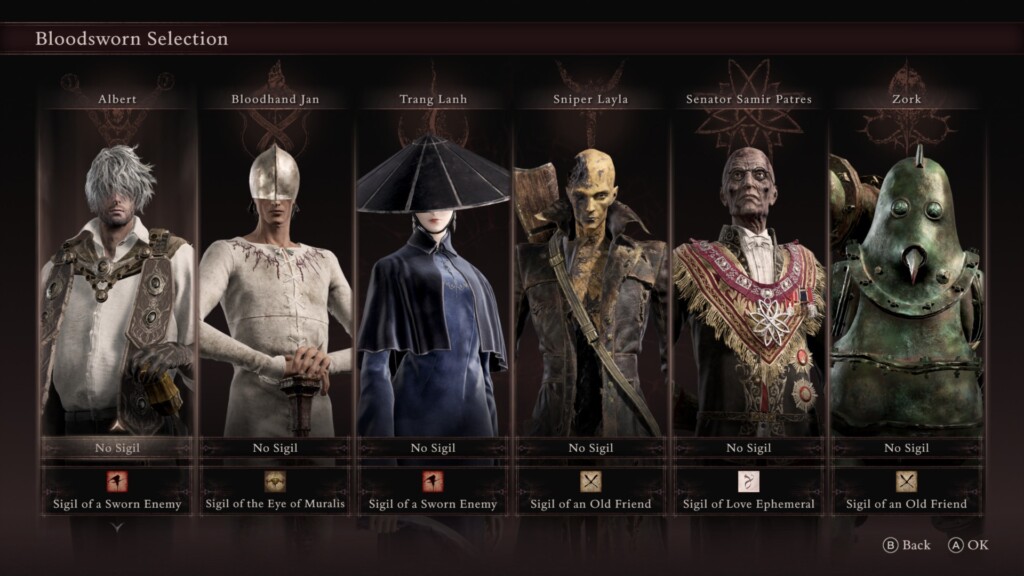
The Network Test, and presumably the final release, opens with a short tutorial that introduces the controls, combat and traversal basics shared across the six Bloodsworn, the game’s playable characters.
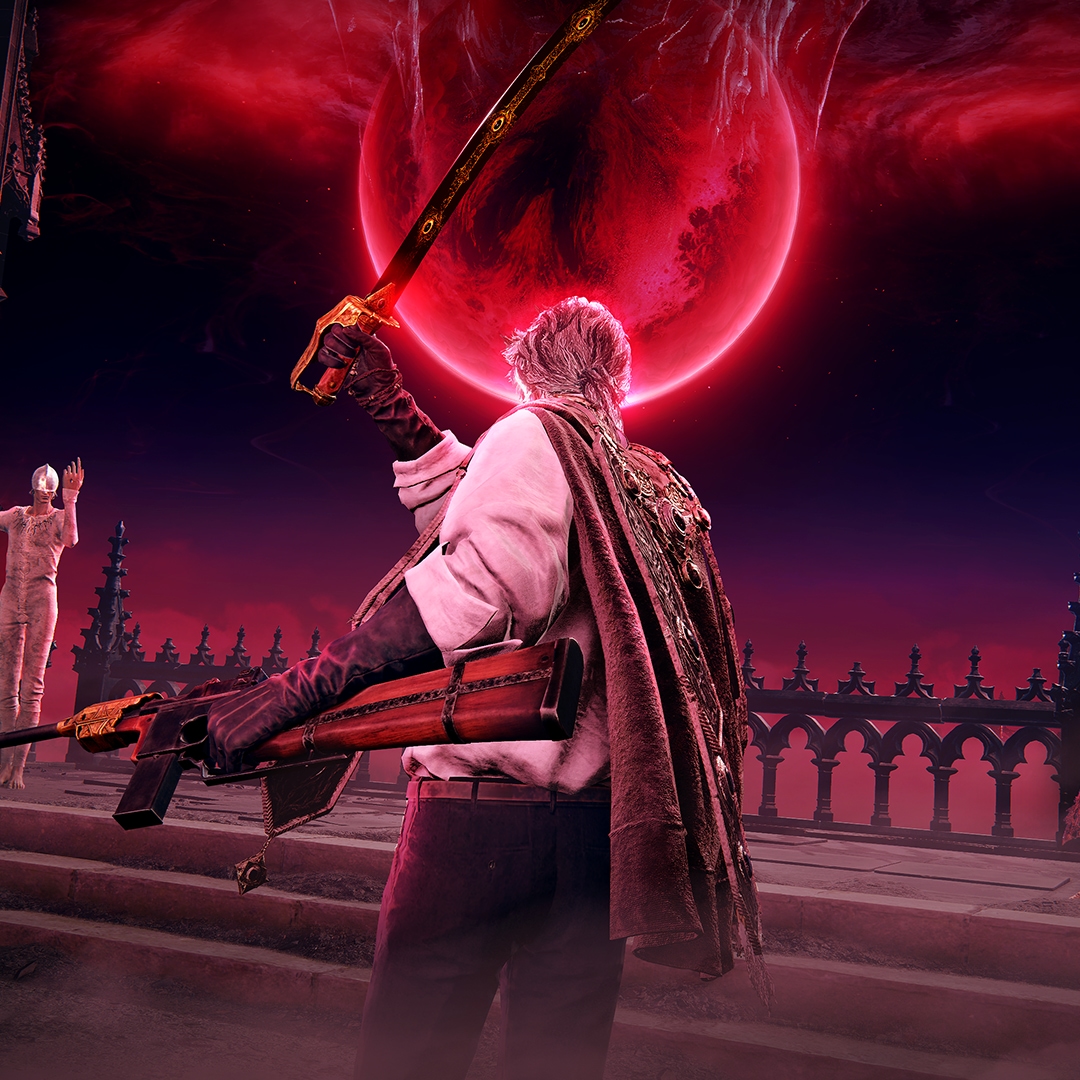
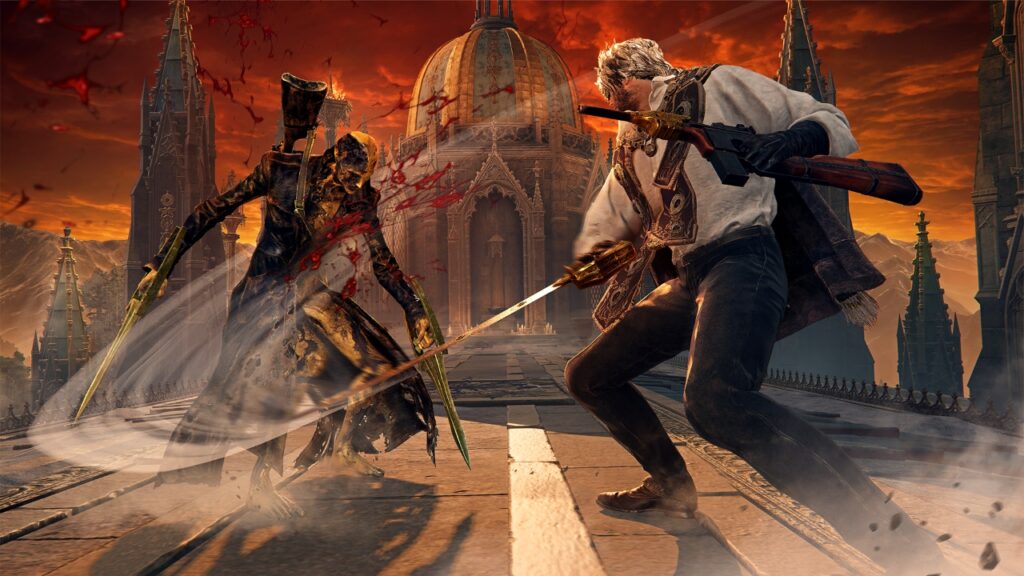
Each Bloodsworn has unique melee and ranged attacks. Close-quarters combat revolves around weapons including swords, dual blades, axes and the like, while the ranged moves offer a little more variety. Pick Sniper Layla as your Bloodsworn and you have access to, appropriately enough, a sniper rifle. Choose Senator Samir Patres, and you can release what is best described as a spectral attack dove. Each Bloodsworn also has its own skill move that can be deployed with a visual flourish. Albert wields a blade made of blood, for example. Most amusing is Zork, encased in a Big Daddy-like metal suit, who can propel themselves across the field of play like a rocket.
The moveset is wide-ranging but elegantly and instinctively mapped. The triple-jump move, in particular, is a delight to use and nods to the game’s eventual verticality. The combination of offensive and defensive abilities, alongside supporting Kin NPCs that can be summoned to assist in your exploits, encourages experimentation and tinkering that will likely provide enough variety to keep the final game feeling fresh long after release. Combat is also much more mobile and aggressive than I initially expected. Given my worries going in, it was probably one of the easiest elements of The Duskbloods to parse in the short time I played, and a testament to the studio’s expertise.
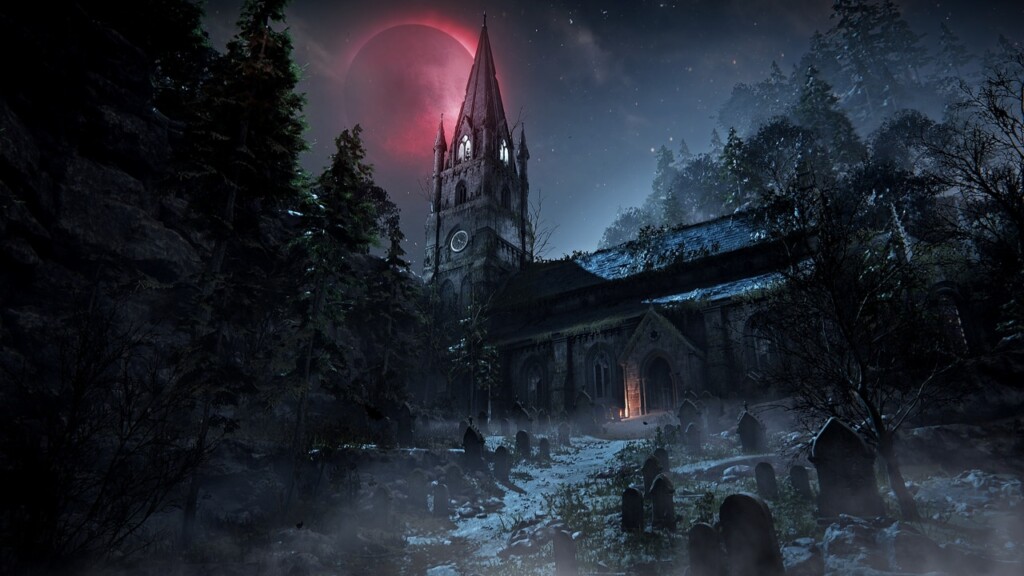
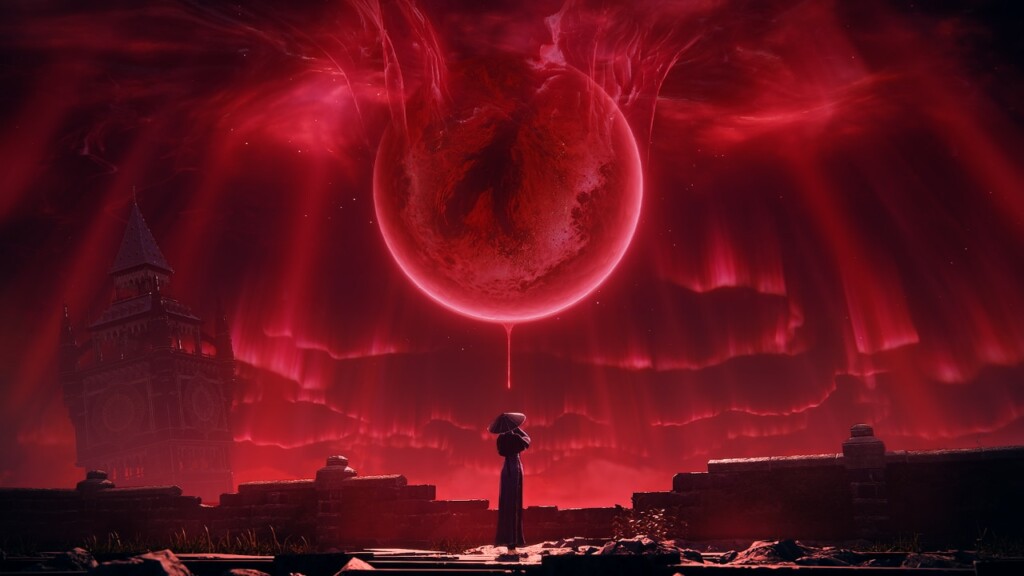
The tutorial stage is a masterclass in scene-setting. There’s a sense of dread and burden in the air that comes, in part, from the stunning vista of a blazing, churning twilight sky, with a moon hanging ominously overhead. A mournful, off-kilter soundscape also stays just on the right side of dragging nails down a blackboard, blending beauty with an undercurrent of unease. The overall effect conjures echoes of Castlevania, probably Bloodborne, and, showing my age, the cult Nintendo 64 and PS1 favourite Shadow Man of all things. No bad thing in my book.
The Dusk Battle
The Duskbloods is fundamentally an online multiplayer action game rather than a traditional single-player RPG. Its PvPvE set-up pits up to eight Bloodsworn against each other, as well as AI-controlled threats, across a four-phase match called a Dusk Battle. Each match takes place on a single map populated with enemies, bosses, objectives and loot, as players compete for Virtue, the game’s main resource.
Virtue comes in various flavours. Repulsion Virtue, for example, is awarded for taking down one of an area’s bosses. Flame Virtue is found by discovering the location of a special throne, providing a one-time boost. Smaller-scale exploits – killing standard enemies or completing tasks unique to your Bloodsworn – also top it up. Because every action feeds into the same score, death in the early phases doesn’t automatically mean elimination. The real cost is missing the opportunity to earn more Virtue, or handing that opportunity to somebody else.
Crucially, this means that hunting other players isn’t the only route to success. The opening phase is wide open, letting you explore and farm experience and Virtue without being forced into a fight. Cooperation has its place too. Teaming up for a tough PvE encounter or forming an alliance can pay off before the pool of survivors shrinks.
Starting in the second phase, the lowest-ranked players are eliminated, reducing the field from eight to six, then four, before the final three face off. Ritual sites begin appearing at this point, offering the chance to fight other players for Virtue. By phase three, the field has thinned enough that avoiding other players stops being realistic. Everyone left knows roughly where they stand, and going for a boss or objective means risking an attack from a rival.
That sets up the final phase, where the whole tone of the Dusk Battle flips. Virtue farming falls away, and it becomes a straight fight for survival among the remaining three players.
It’s a slow-burn build of tension that sits somewhere between an action game, arena combat, battle royale and objective-based multiplayer, although none of those descriptions completely captures it. Its shifting and fluid components remind me of school playground games, where the rules could change in a heartbeat, along with friendships and alliances.
The Lands of Dusk
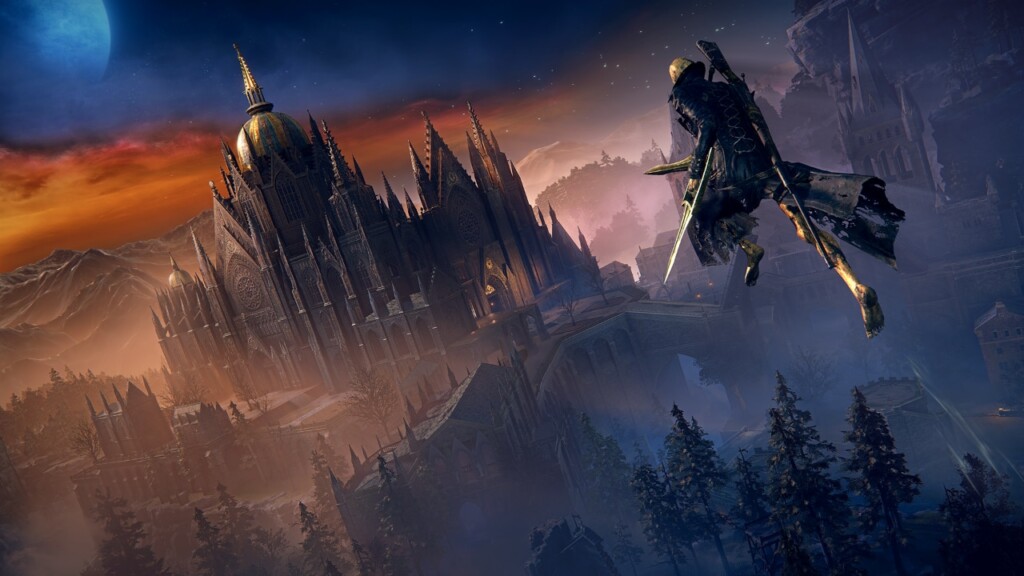
The map, of which only one was available during the test, was divided into three areas: the Cathedral, City Streets and Nether Gate Lake. Each location is distinct, but they connect cleanly to form a spacious yet intricate environment, with alleyways, nooks, rooftops and a forest to explore. Understanding the Lands of Dusk will no doubt be as important as building your characters and learning their abilities. The limits of the map in the test were clear, but they teased a larger playing area in the final release.
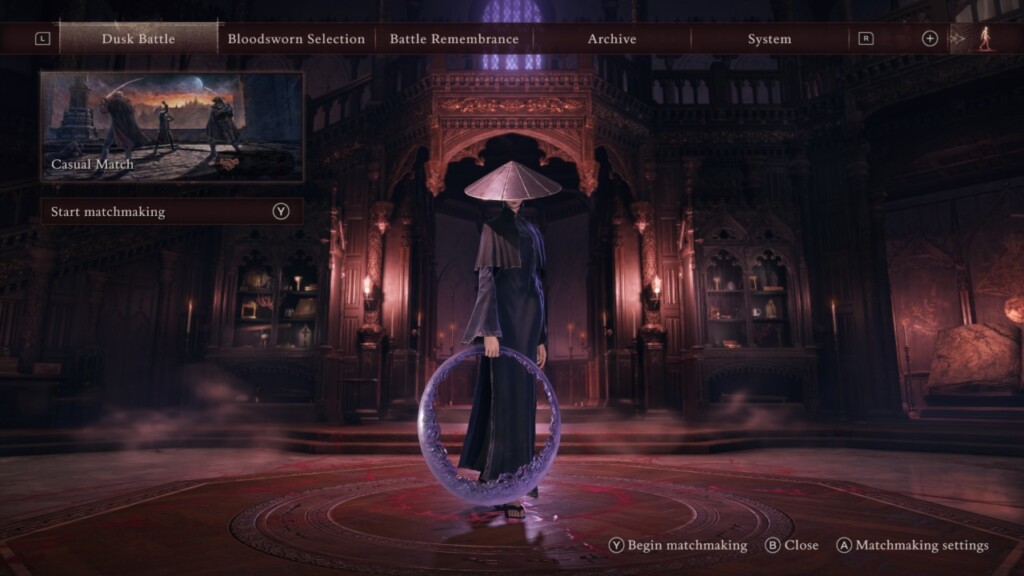
Between matches, you can retreat to the House of Night, which acts as your personal lobby. Here, you can prepare and customise your Bloodsworn before heading into another Dusk Battle. The menus hint at deeper lore and story, suggesting there is considerably more to uncover beyond the relatively constrained slice available in the test. All of this bodes well for The Duskbloods‘ long-term prospects, suggesting a game with depth that will take time to learn and perfect. At least, I think so.
I can’t, hand on heart, say that I completely understood the game’s format from this brief preview. The Network Test included a glut of tutorials that explained everything in detail, but at such a pace that I’m not sure I retained every morsel of information. There’s evidently much more to discover, including character setup, progression and abilities, than I could parse in the time available. But if four hours weren’t enough to fully understand it, that feels less like a limitation and more like evidence of the game’s staying power.
As an online stress test, and aside from that first failed session, the game seemed to run without a hitch. I had no trouble finding other players, and the action stayed fluid. Thankfully, it also appeared that players remained in their matches rather than dropping out mid-battle. If players did leave, I suspect the presence of computer-controlled NPCs masked it well.
An unusual exclusive
So, four hours played. The most I have ever put into a FromSoftware game. Is it for me? I’m not entirely sure, but I came away impressed with the level of craft, detail and polish. Even in this unreleased state, it’s a beautiful game. Its willingness to blend different multiplayer elements in a way that feels seamless, competitive yet playful, is also appealing. Despite the studio’s reputation, The Duskbloods feels accessible.
As a Nintendo Switch 2 exclusive, it also adds something distinctly different to the system’s library. It’s more adult-oriented, and although it has a mournful atmosphere, it’s not without moments of levity. If you catch a clip of Zork hurtling across the environment, you’ll clue in to the game’s underlying humour.
The Duskbloods might not make me a convert, but it’s clear that FromSoftware has made something unusual, characterful and full of potential.
The Duskbloods is planned for release on Nintendo Switch 2 later this year.