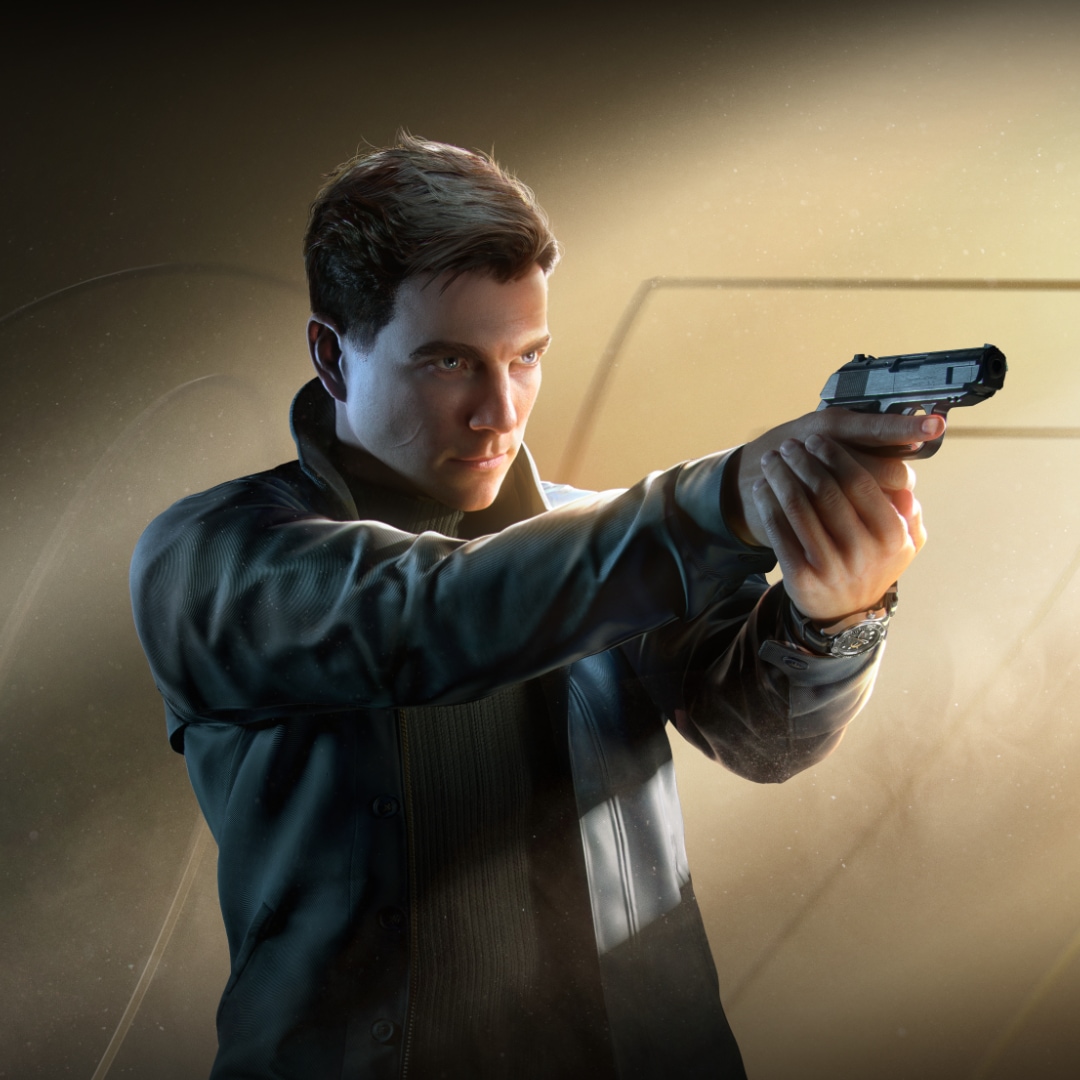




The first thing you do, in 007 First Light, is waggle an analogue stick to wake James Bond up.
It brings to mind the start of Assassin’s Creed II, where its infant star, Ezio, was held aloft crying, and we had to move his limbs. Ubisoft’s felt a grand gesture, beginning a game with a David Copperfield statement: I am born! IO Interactive goes for two births. Bond’s career as a naval aircrewman is cut short, when his chopper is shot down over the Iceland Sea. He plunges into the waters, sinks onto a rockbed, and that’s where we come in to reboot him.
His second birth follows soon after. Once he limps onto a gloomy beach, past the fresh-roasted wreckage, foils an ambush by Balkan mercenaries, rescues a group of hostages, and blows up an enemy installation, he is recruited into MI6. There, under the aegis of M (played by Priyanga Burford, she is brisk, frosty, with a radar finely tuned to rough potential, and the means to sand it down), Bond is shipped to Malta to train as a double-0. Here IO cracks the narrative whip. We race a 2006 Aston Martin DBS, clamber over an obstacle course, capture a flag, shoot at targets, and slug it out with a fellow-recruit. It’s a playable montage, each scene cutting into the next, and you feel the director, Hakan Abrak, tense into a rushed rhythm.
It isn’t until James and his comrades are set up in a Bayswater flat that we get to take stock, and slow down. It soon becomes clear, however, that the heave-and-lull is the defining condition of this new Bond, played by the thirty-one-year-old Patrick Gibson. As if suffering an irregular heartbeat, he lurches through linear palpitations (one set piece has him gun through a motorcade of goons and leap onto the back of a plane, mid-takeoff) and then has to flutter back down to a resting pulse, as IO cues up one of its large Hitman hubs. Like no other videogame Bond, he rails against the bars of his own level design.
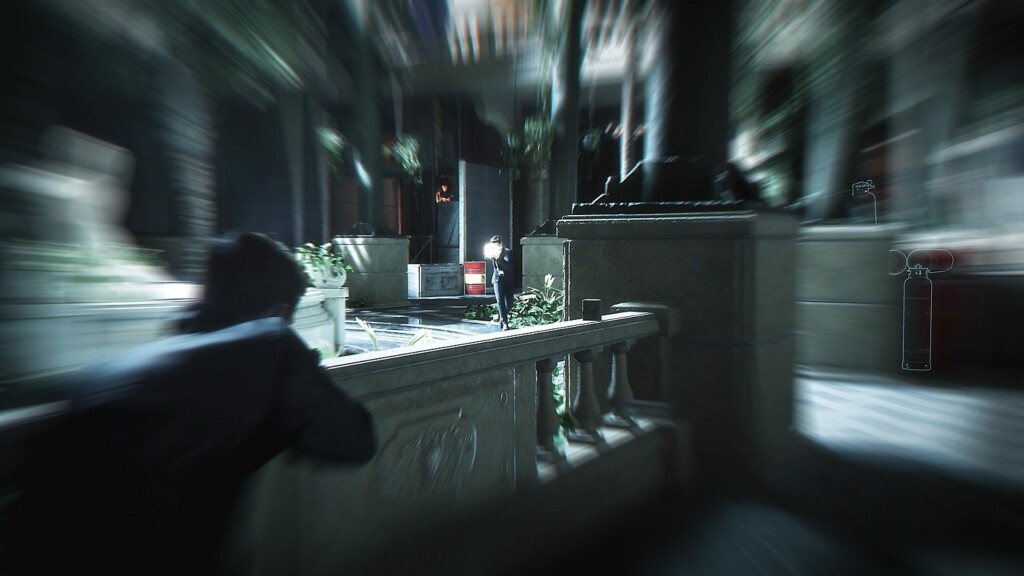
This works early on, as the possibilities of the adventure are in bloom. The first proper mission has us in Slovakia, at the Grand Carpathian Hotel, for the World Chess Championships. This is a wondrous slab of what IO does best, of what it has spent years honing: a baroque castle, topped with sheets of green copper, whose interior decor resembles an explosion of champagne and cake. It’s crawling with NPCs and riddled with secrets, and IO pokes good fun at itself here. On the trail of a homicidal bellhop, Bond sees his target in sudden chef’s whites: “How does he manage to change clothes so fast?” It’s a neat jab at Agent 47, but also a useful one. First Light is not quite of a piece with the World of Assassination trilogy; the game this most resembles is Hitman: Absolution, whose open-range hubs squirmed within the narrowing scope of the plot.
There are, naturally, myriad ways to proceed: shinny along creeper-covered walls, pickpocket staff passes, pretend to be press, or else punch through waves of security. Hand-to-hand is all counters and throws, with splintering desks and cracked bottles. Satisfying stuff. You accrue points through guileful play (eavesdropping on potential leads, for example) and can spend these to bluff into private zones – posing as an IT consultant, say, or as the guy sent to fix the coffee machine.
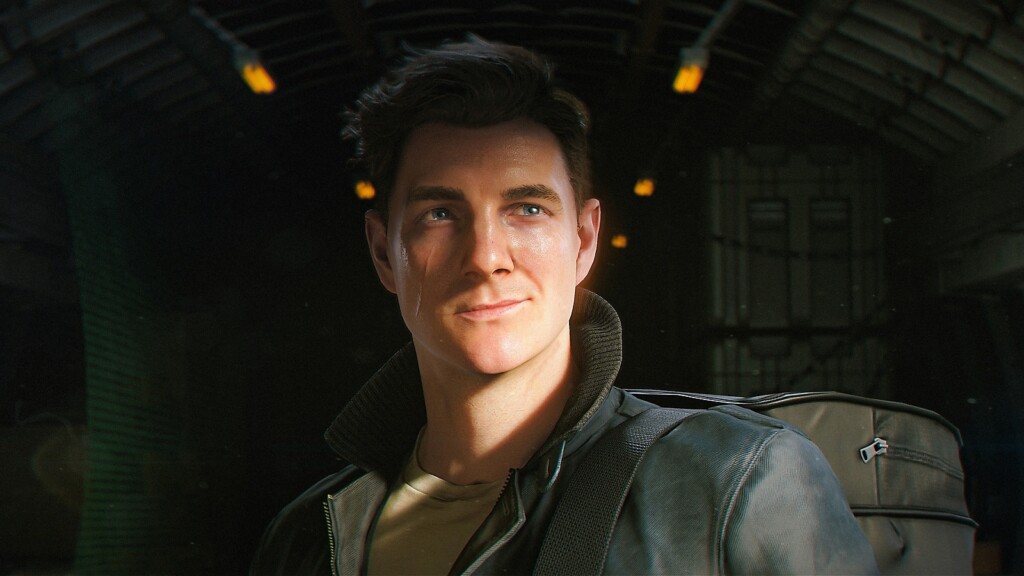
The problem is, our man has plenty of space around him but no room – nowhere to expand, to let us know what kind of Bond he is, or will be. Daniel Craig did well in extremis; his Bond was always bruised, those Tom Ford suits fitting him much the better when they were stained and torn, and though he gave little away we tailored him down to a type. Gibson is, at times, like a man at leisure, a shmoozer in the mode of Roger Moore. Trim and tall, he has a boyish face, frosted into the Glacier Engine with a scar down one cheek (a touching homage to Fleming that never made it onto film), and he refuses to melt. This is partly good news. Like his signature drink, shaken too much the result chips and turns watery; all the same, you keep willing him to stir. First Light is the first 007 product whose pace is only possible in a game. Totally elastic, and pitched somewhere between the trickle of a Cold-War novel and the heated surge of a modern action movie.
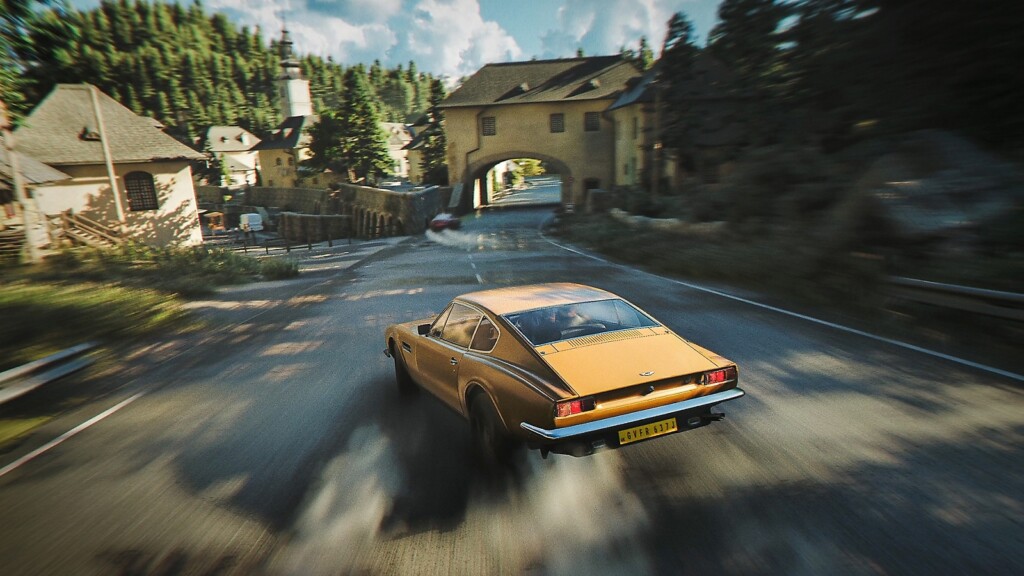
This never troubled Bond games past. Activision had the likeness, and with it the desperation, of Craig, and went for the crunched-glass panic of Call of Duty. EA had Brosnan and Connery on its hands, and even when it used an empty shell, in Agent Under Fire, the tone was plush pulp. No character studies, onto the next car chase. IO gamely tries its hand at these – with writhing, rubbery handbrakes and a generous heap of collateral damage – and they’re breezy fun. (We shouldn’t take this for granted. EA had Need for Speed under its belt, but the DB5 in From Russia with Love took corners like a wheelbarrow, all wobble and yaw. Likewise, Bizarre Creations made no less a series than Project Gotham Racing, yet the drives in Blood Stone were still a grind.) None is longer than two minutes, and the story stalls to make room for them; they come across like breathless pauses for breath, pitstops for the refuelling of aggression.
We also get firefights, of course – standard third-person cover shooting, peppered with gizmos from Q branch. It’s refreshing that a developer has – to paraphrase Ben Whishaw in Skyfall – really gone in for all that. The clutter of gadgets has been all but swept from the recent Bond pictures, and it’s lovely to see our hero tricked out with a wealth of clicky thinglets. His watch hacks electricals and fires a lock-smelting laser; his lighter explodes into a choking murk; and his phone conceals a clutch of poison-tipped darts. These toys won’t flat-out win your fights, but they shift the tide in your favour; and each environment is dutifully crammed with red canisters and ready-to-crumple gantries.
The lethargy bites in the second act, as Bond and his skeptical mentor, John Greenway, scrabble around a granite-dark comb of offices in Central London. The game’s dull plot hinges on A.I. – what else? – and this sequence has us pulling the plug on server stacks, just as the astronaut in 2001: A Space Odyssey tried to put HAL 9000 to sleep. The urgency of the scene, which concludes in fireballs and a race to the helipad, is severely undercut by the mini-sandbox. This includes such drab diversions as having Greenway boost you onto ledges, persuading a robot vacuum cleaner to cough up a swallowed key, then fiddling with passcards to get into an office. I wanted to remind Bond that, given the glass with which the place is constructed, he ought to make use of that marvelous invention known as a gun. The whole sequence cries out to be a straight-action spectacle, and any urgency leaks away with a deflated hiss.
The lead writer is Michael Vogt (who also wrote Absolution), and the plot wavers back and forth. The locations are served up liberally – a lush Vietnam health spa, lapped by cologne-advert blue, not to mention a snow-capped mountain lair – but, at around twenty hours, the game runs out of puff well before the end. I wish I could report that we get a decent crew of villains, but this is a weak bunch.
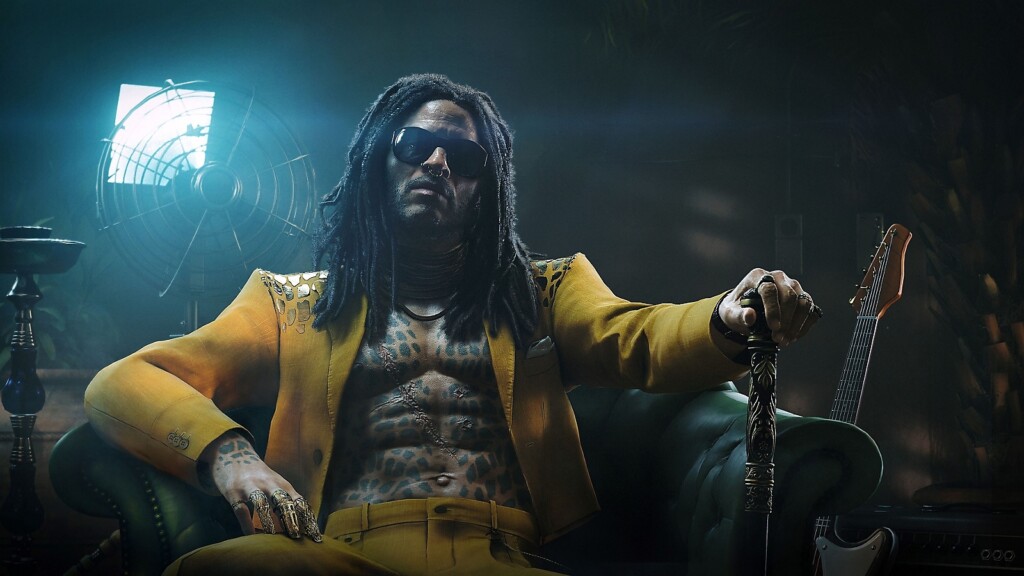
A diversion in Africa has you in the court of “the pirate king Bawma,” who has built a mock-city out of beached ships. The whole embarrassing chapter belongs in Uncharted, and, as played by Lenny Kravitz in a custard-yellow blazer, Bawma lacks even a dollop of menace. When the true evil is unmasked, closer to home, it’s no surprise; earlier, he is introduced with a clunk, fires off a scowl, and departs your company with the words, “no rest for the wicked.” Hmm.
On the credit side, true to its title, the game delivers a fleet of firsts. One dialogue-driven torture scene has you lashed to a block of limestone as a saw blade whirrs toward Bond’s crotch. We get introductions to a new tech-savvy Moneypenny, ensconced in her own cylindrical pod, back at HQ, that looks as if it could withstand a nuclear bomb. A dapper new Q, with a pencil moustache, like a silvery sketch of David Niven. Plus, if you’ve ever wanted to tie a bow tie with a controller, receiving directions over an earpiece, this is the game for you. The final act redeems itself by virtue of Bond not having anyone chirping at him; he isn’t truly alone, thanks to a femme fatale of no fixed abode or allegiance, but he has longer stretches of quiet.
The score is composed by English duo The Flight, and the best thing about it is the liberty with which it uses the Bond theme – not excessive, but unafraid, when the moment calls, to wrap the action in Monty Norman’s chords. We also get a reprise (quite unearned, frankly) of John Barry’s theme for On Her Majesty’s Secret Service. Would that Lana Del Rey’s title music (co-produced by David Arnold), an unmemorable blend of the moody and the glum, could match up.
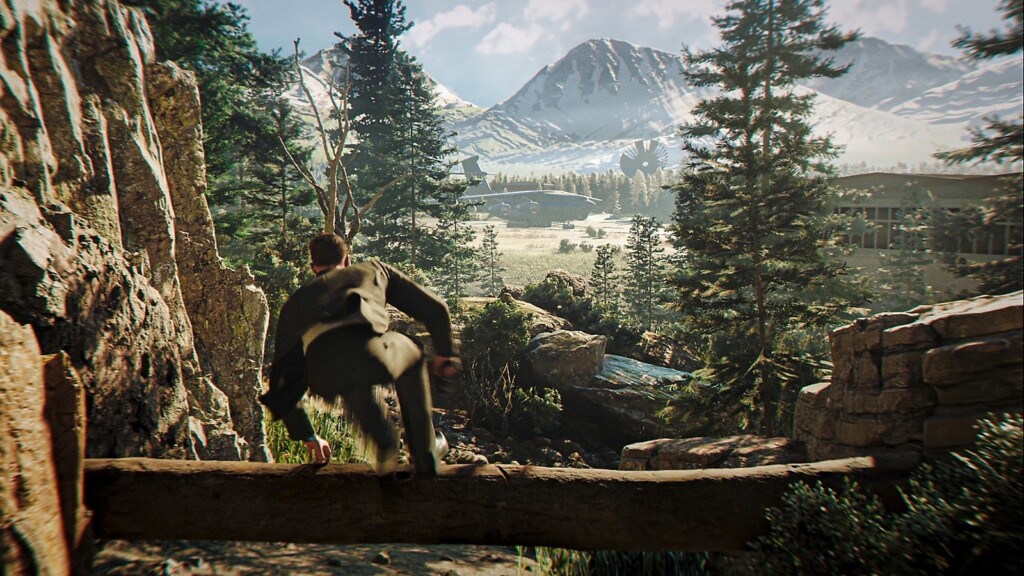
There are few studios as suited for the job as IO. This is not only for its cachet with Hitman – it earned its kills, so to speak – but for its class status. This is a developer on the thin-aired upper slopes of Double-A, with an engine all its own. Like its hero, IO has only now acquired its license for lavishness (the Amazon MGM Studios ident adorns the opening credits, and, though IO publishes here, it surely benefits from a cash injection), and you can see it chafe against the grace of that charity. First Light doesn’t have the obscene polish of a Naughty Dog or a Rockstar; the animations have a dab of jerkiness, the hair on NPCs has that stencilled fizz, and the landscapes seem lacquered in thin prettiness, rather than deep beauty. In other words, they have the quality of old Bond movies: the joys of brochure-bright travel, underwritten with a cheap feel that leaves you restless. They give you the world, and it turns out not to be enough.

Despite all this, the bulk of First Light is enough. It gets by mostly on its eye for detail. The lead artist, Rasmus Poulsen, pays homage to Ken Adam; rooms yawn like silos, and one swanky exhibition in Knightsbridge boasts one of Da Vinci’s flying machines (there goes Ezio again, on his own ascent), strung up on wires. Gibson is crowded by the ghosts of his predecessors, and, though the nods are nice for buffs, they leave his Bond a little unbelievable. Chancing on a leaflet for a blonde cellist, you smile as the allusion to The Living Daylights breaks through; but as he remarks that he saw her perform Mozart once in Bratislava, you think, Did you? What fit for Dalton hangs baggily off Gibson’s shoulders.
Perhaps in the next game, his portrayal will sink in and gain an outline of its own. If IO finds the right tempo for its new Bond, raking in the sandbox or ramping up the hurry, then we could have something singular. The action is already here, and sure only to improve; but it’s oddly fitting, perhaps, that the man is still in progress, staggered just now by a problem all his own. He has no time to live.

Game: First Light
Platform: PC, PlayStation 5, Xbox Series X|S, Nintendo Switch 2 (Q3 2026)
Developer: IO Interactive
Publisher: IO Interactive
Release Date: 26 May 2026