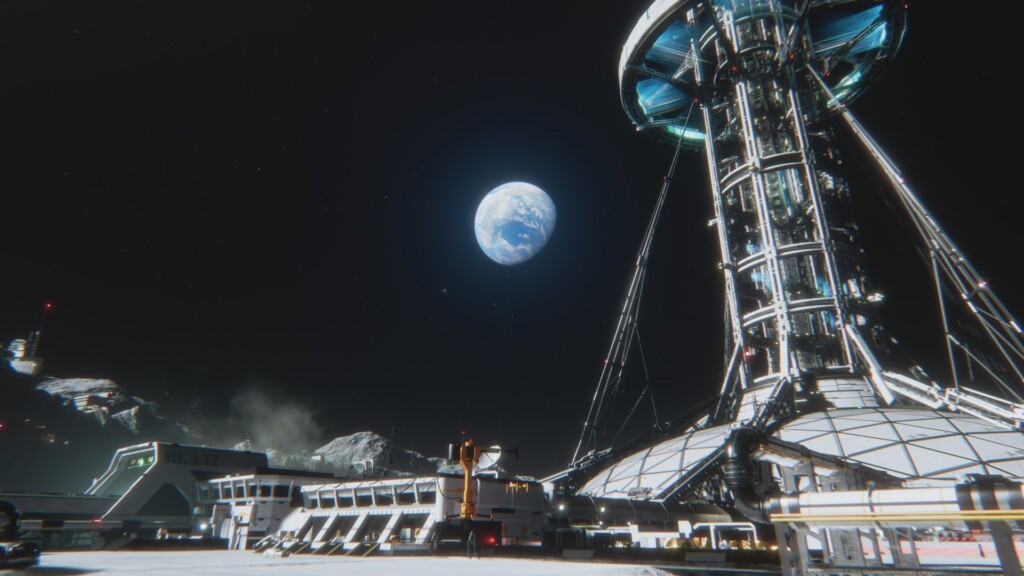
With the Artemis II mission putting the Moon back into focus as a place of wonder, it feels fitting that the initial title screen for Pragmata shows a view of Earth from the lunar surface, distant and serene.
It doesn’t last, of course. Within moments, Pragmata pivots from awe to urgent escape, trading stargazing for survival as its moonbase setting begins to unravel in spectacular fashion. That peaceful moment is one to cling to as the game expands into something unsettling, ambitious and thrilling.
Before long, the gleaming Buck Rogers corridors of the Cradle lunar colony give way to spaces that feel like an unholy collision of the domestic, the scientific, and the surreal. Environments layer spectacle on top of the routine to make everything feel corrupted, unstable, and just slightly… off. It’s a setting that refuses to sit still, and that momentum carries the entire experience forward.
The Moon is often associated with madness. Here, the madness is given physical form. The MacGuffin is Lunafilament, a substance derived from a lunar ore that can replicate almost anything. Furniture. Buildings. Habitats. Trees. Entire city blocks. All of it can be grown from Lunafilament. In the right hands, it’s a miracle of fabrication. In the wrong hands, well, welcome to Pragmata.
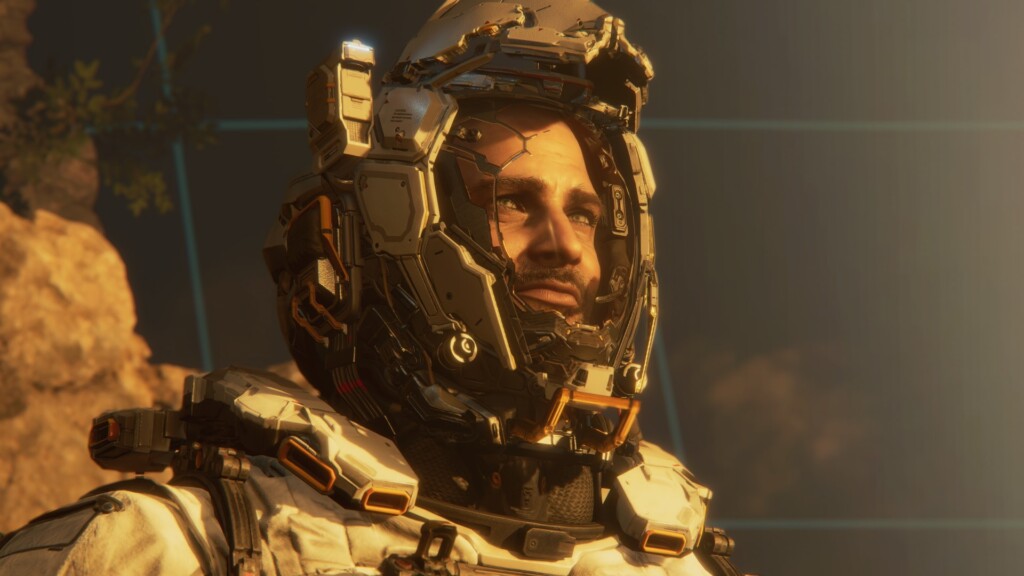
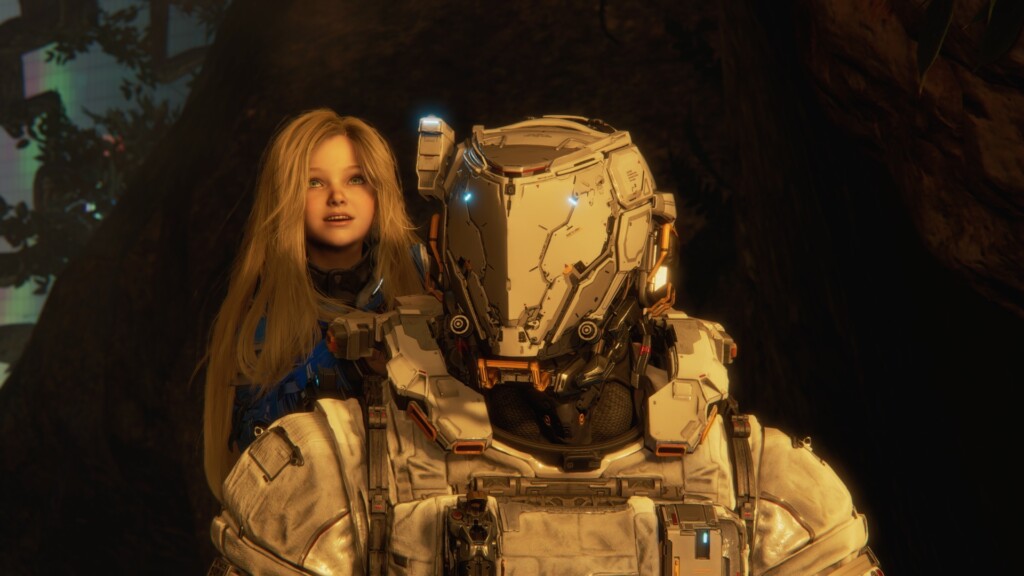
Hugh and Diana
Standing at the centre of the chaos is Hugh Williams, an auditor dispatched to investigate the lunar facility. He is almost immediately separated from his team when a disaster leaves him as the sole survivor. Hugh is a capable and engaging protagonist, but he is defined more by movement than personality. His suit is chunky but never clunky. He is agile and responsive, with a sense of weight that never tips into sluggishness, making him an anchor in a world that rarely stays predictable.
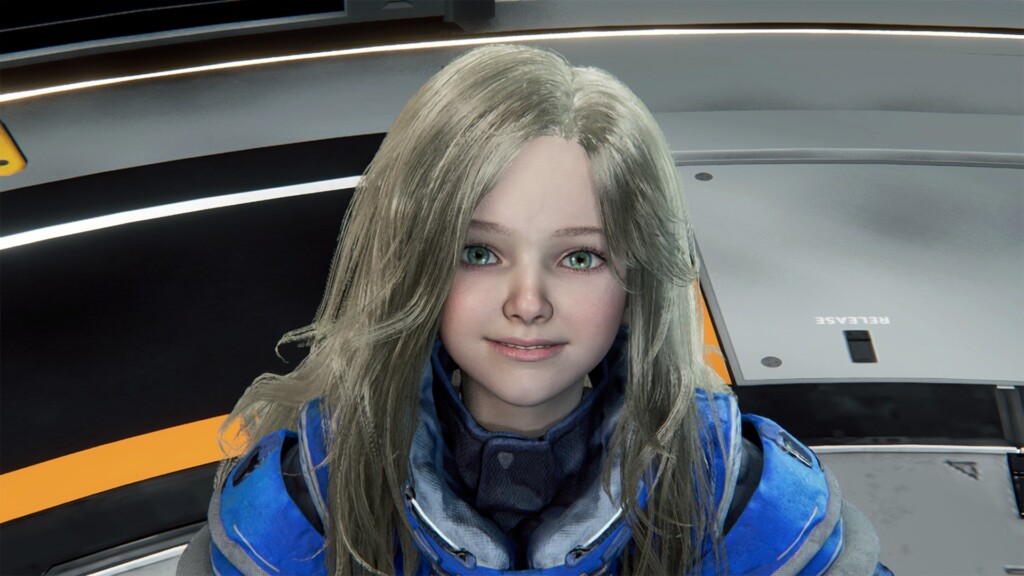
Balancing Hugh’s pragmatism is Diana, the android child he meets on the station. Where Hugh is measured, she is impulsive. Where Hugh reacts, she questions. As regular Thumbsticks readers will know, I often call upon my niece to help test family-friendly video games. In Diana, I see the same precocious yet naïve energy of a six-year-old finding her way in the world. Her voice might initially grate, but her curiosity and warmth are such well-observed traits that they quickly become the heart of the story.
The structure of their relationship is not especially novel, but it feels distinct from, say, The Last of Us and God of War, mostly because it sidesteps the obvious sad dad tropes. Their dynamic gives the game an emotional core, balancing the action with moments of levity and wide-eyed discovery.
Guns and grids
For all the good work in building a lead duo you can relate to, combat is where Pragmata truly distinguishes itself. It’s centred around refined third-person gunplay, but layered over that familiarity is a grid-based hacking matrix that transforms each encounter into something more dynamic.
Most enemies you face are armoured to the point of near-invulnerability. Take aim and the grid appears, visualised from Diana’s perspective. Navigate the right path from the entry node to a target node and the foe becomes vulnerable, allowing Hugh to pour fire into its weak points. It’s like playing a shooter and a puzzle game at the same time – something akin to Gears of War meets Pipe Mania – but it works.
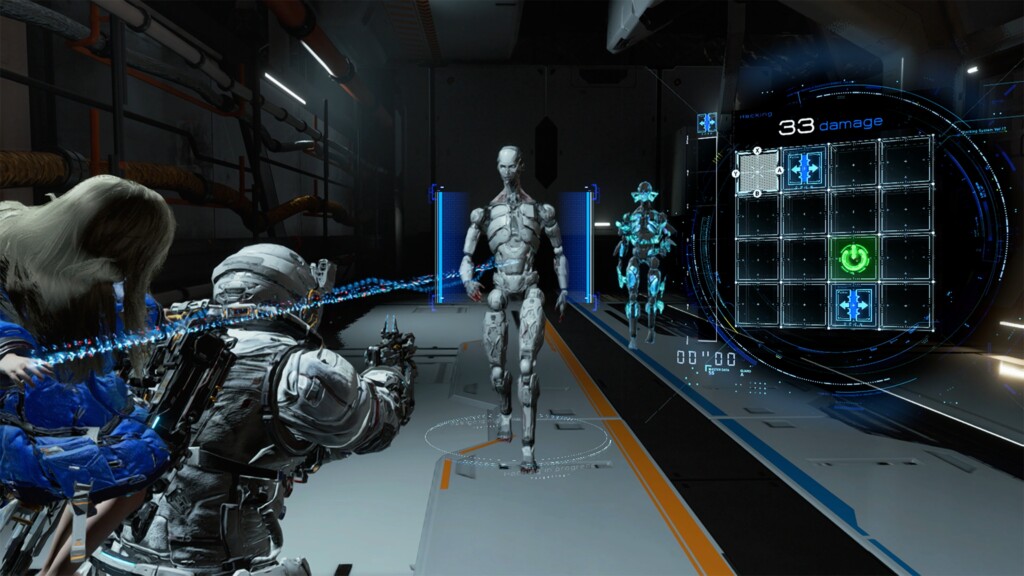
The brilliance lies in how these systems overlap. Shooting alone is not enough. Hacking alone is not enough. Success comes from juggling both, managing positioning and problem-solving simultaneously. You might reasonably expect the split-brain demand of all this to produce chaos. Instead, Capcom has engineered a kind of micro flow state from the combination. The gunplay feels instinctive and physical. The hacking is deliberate and spatial. It is a precisely implemented piece of game design that evolves throughout the game’s runtime without ever losing its essential readability.
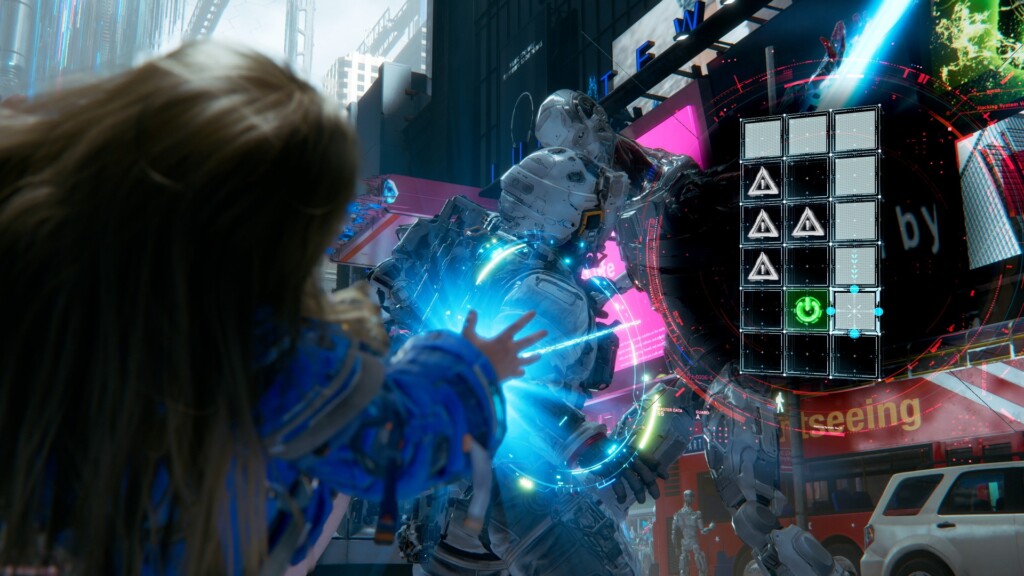
A very video game video game
Simultaneous shooting and puzzling is something only a video game can do. And for all its high-concept sci-fi, Pragmata never forgets that it’s a game. There is a distinctly ’90s sensibility running throughout, with glowing power-ups tucked behind corners and upgrades doled out with abundance. Fun is prioritised over strict realism.
There are echoes of Capcom’s previous work. You will notice more than a few shades of Resident Evil in the game’s shape and pacing, but it’s much more kinetic. As the scope widens, its sense of forward momentum and spectacle also recalls the best of PlatinumGames, particularly Astral Chain and Vanquish. This energy enlivens even the most familiar objectives. The classic “get the power back on” mission structure feels revitalised here, which is no small achievement.
Structurally, Pragmata leans into a hub-and-spoke design. Expect to probe a new area, encounter something you are not yet equipped to handle, retreat, and return with a more considered approach. Thankfully, new mods, powers, and upgrades give you fresh ways to experiment. There is very little downtime between ideas and even less incentive to stick with a single loadout.
Printing error
If there are rough edges, they are found in the story. It is a familiar tale of artificial intelligence spiralling out of control and technology pushing beyond its limits. But ultimately, it’s also the story of a megalomaniacal 3D printer, and the unsettling imagery and concepts that premise enables are much more interesting than the clichéd motives of the game’s antagonists. Even so, Hugh and Diana carry the ending, with a denouement that provides a satisfying and moving payoff to their relationship.
Pragmata is a game of contrasts, with familiar systems colliding with unusual ideas, and it thrives because of it. The extended development time may have been cause for concern, but it was worth the wait. Aside from a few narrative bumps, Pragmata sits comfortably among Capcom’s best and is a stellar new IP for the publisher.
The Moon remains a place of wonder, then, but has never been a more compelling place to avoid.
Game: Pragmata
Platform: PC, PlayStation 5 (Reviewed), Nintendo Switch 2, Xbox
Developer: Capcom
Publisher: Capcom
Release Date: April 16, 2026