

Pokémon Pokopia is a spin-off that swaps catching for crafting and unexpectedly turns out to be one of the best Pokémon games ever made.
If Animal Crossing: New Horizons arrived at a moment when the world was closed off, offering a gentle escape into an idyllic outdoors, Pokémon Pokopia feels like its opposite. In a world that can feel just too unbearable some days, it offers something different. It’s a game about about taking a place in ruins and building something better. Where New Horizons offered a retreat, Pokopia offers restoration.
On paper, the game reads like a focus-tested mashup. Pokémon + Minecraft + Dragon Quest Builders + Animal Crossing = a huge success, surely? The sort of pitch that raises accountants’ eyebrows rather than players’ expectations. Early previews suggested to me that it would be a fun and breezy springtime spin-off, something to pass the time while we wait for the next mainline adventure.
How wrong that assumption turned out to be.
Developer Omega Force has delivered something far more ambitious. Pokémon Pokopia is both a deeply absorbing sandbox and a surprisingly rich narrative adventure, blending systems-driven creativity with a genuine sense of purpose to produce an experience of real substance. That accountant-pleasing formula turns out to be a winning one for the player too, with its inspirations blending seamlessly, along with a dash of Viva Piñata for good measure.
Building with Pokémon
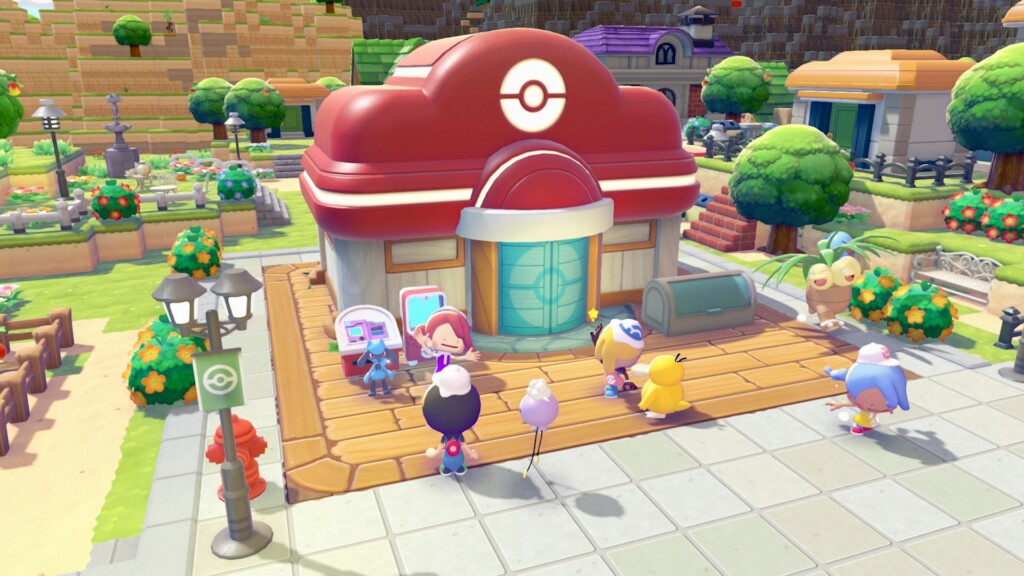
Screenshots give a clear indication of how Pokopia uses environmental block-building as its foundation, and on that level it’s a supremely polished entry in the crafting sandbox genre. But there is considerably more to the experience than that.
There are no human characters in Pokopia for a start. You play as a Ditto, working alongside Pokémon rather than above them. It’s a significant design choice that reframes the entire relationship between player and Pokémon from the outset, and a mechanically clever one too, with Ditto’s morphing abilities adapting to whatever the task at hand requires.
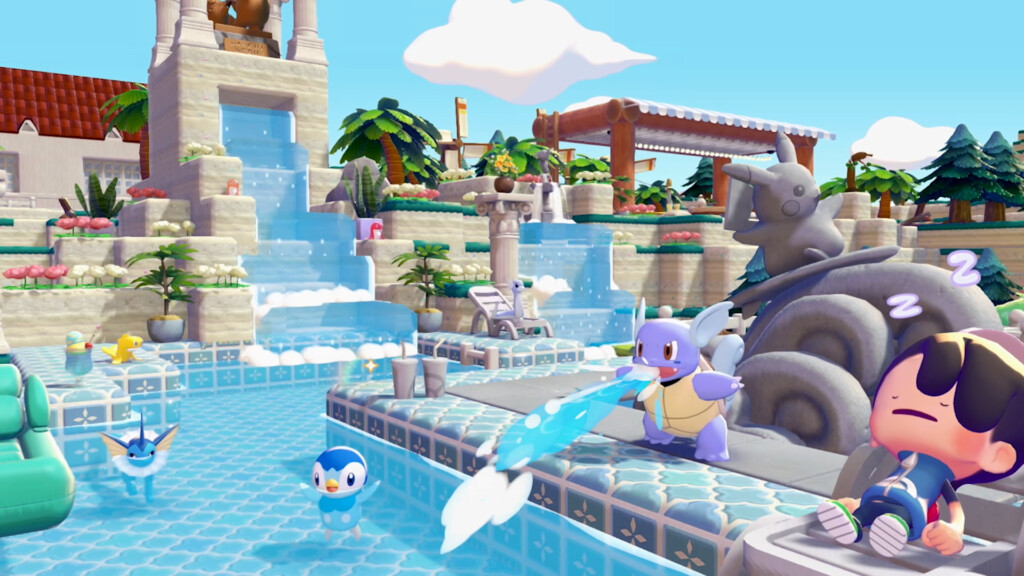
The real magic lies in how the game rethinks what Pokémon actually are. Moves once reserved for battle now serve the world around you, reshaping terrain, restoring ecosystems, and unlocking new possibilities. The game’s great achievement is that it never feels like the Pokémon formula is being awkwardly bolted onto a different genre. These abilities feel entirely natural in this setting, as if this is precisely how they were always meant to be used. It’s a contrast to the Legends spin-offs, where experimentation yields mixed results. Here, everything feels unified.
Progression unfolds through a series of interconnected tasks, with objectives layered within objectives, each feeding into the next. One early sequence captures this beautifully. You encounter an Onix trapped within a cave, but freeing it is anything but straightforward. You’ll need to locate a Slowpoke, forge a path back to your base, manipulate the environment to increase humidity, cultivate grasslands, uncork a few waterfalls, and ultimately trigger rainfall to soften the surrounding terrain, all to dig poor Onix free from its clay prison. And it only gets bigger from there. As each zone opens up, you’ll find yourself managing everything from feeding treats to Pokémon to town planning, building works, and creating energy infrastructure.
On paper, it sounds laborious. In practice, each step is an exercise in discovery, a chance to experiment with systems, collaborate with Pokémon, and reshape the world in meaningful ways.
Ruins to renewal
Comparisons to the Animal Crossing series are inevitable, but Pokémon Pokopia is not as passive. This isn’t about settling into a comfortable routine, but rather about actively shaping a better future. The influence of the Dragon Quest Builders series is more pronounced in the craft and building aspects, which Omega Force has refined across a series of games.
Gradually, brick by brick, building by building, zone by zone, you begin to piece together a sense of what life looked like before. It’s a slow unfolding of narrative that, over time, provides genuine emotional weight to your actions. It’s bleaker in places than you might expect, though the game’s warmth and humour compensate. Each Pokémon’s personality emerges over time, and there’s enough depth to their archetypal traits that they begin to feel closer to actual friends than Animal Crossing’s villagers. At times you’ll also catch small, unexpected moments, such as two Pokémon chatting, forming unlikely bonds, or even flirting, which give the world a sense of life well beyond its mechanics. And, as the memes demonstrate, the game is relentlessly funny.
More than a spin-off
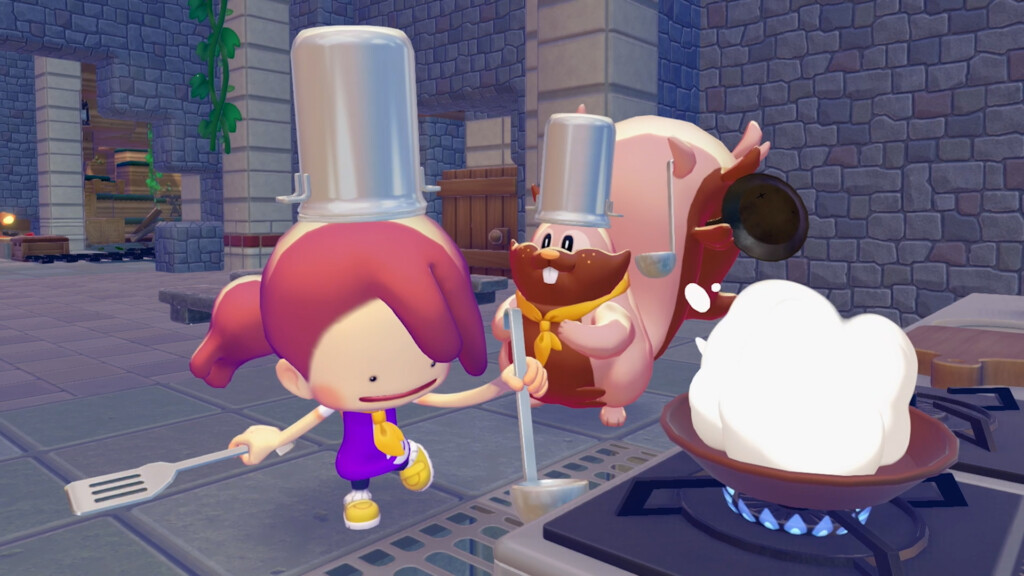
What’s most impressive is how cohesive it all feels. This is a game with landscaping, construction, furnishing, crafting, photography, farming, decorating, utility management, housing, and more besides. The list of things to do is dizzying.
Remarkably, every system, every mechanic, and every interaction seems considered and is part of a larger whole rather than a collection of half-formed ideas stitched together. There’s very little friction and a consistently satisfying feedback loop from hour one to hour one-hundred. Though there is a narrative conclusion to reach, the scope of what’s on offer, before and after the story resolves, is enormous.
A Switch 2 success
Let’s be honest, this review is somewhat late to the party. Pokémon Pokopia is already a considerable commercial success at the time of writing, and deservedly so. You may not need me to tell you this game is worth playing, but I will anyway. This game really is worth playing.
The Nintendo Switch 2 has enjoyed a strong first year of releases. A run of solid four-out-of-five titles, including Hyrule Warriors: Age of Imprisonment, Metroid Prime 4: Beyond, and, yes, Pokémon Legends: Z-A. Yet, somewhat unexpectedly, Pokémon Pokopia is among the very best of them, sitting comfortably alongside Donkey Kong Bananza as a five-star game that justifies owning the hardware.
It makes for a telling counterpoint. Where Donkey Kong Bananza revelled in destruction, Pokémon Pokopia finds its joy in creation. There’s no shortage of smashing to be done, but here it’s all in service of laying foundations and watching something new take shape. In Pokémon’s 30th year, this game proves transformative for the IP. This isn’t about catching them all anymore. It’s about community and working together to create something lasting.
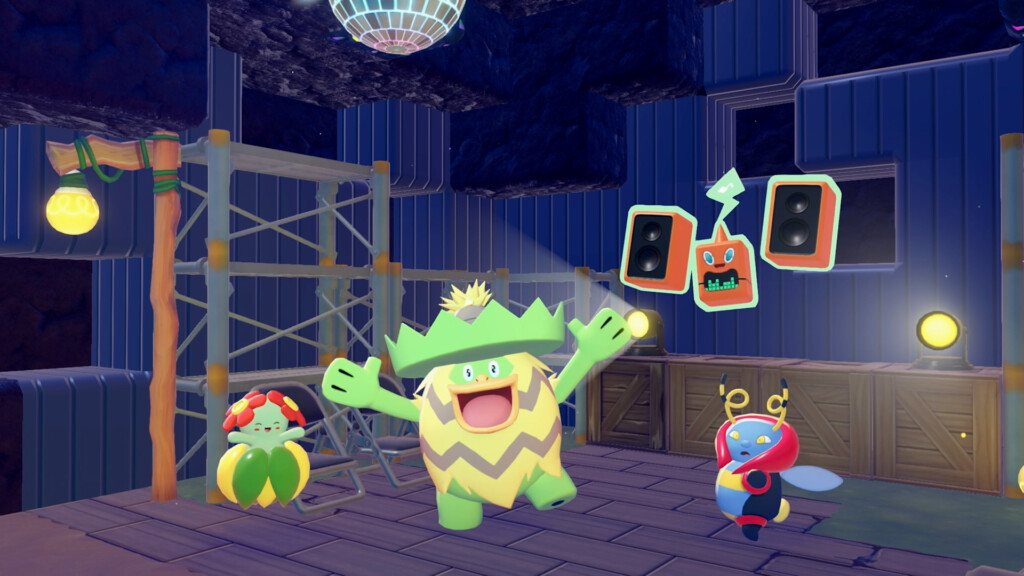
Pokémon Pokopia isn’t just a pleasant surprise. This is a brilliant, lovingly crafted game that stands apart not just from other Pokémon spin-offs, but from the best the franchise has ever produced. It’s the most compelling Pokémon game in years, and a genuine Nintendo Switch 2 system seller.
Many other reviewers have already given this game five stars. All I can say is: Ditto.

Game: Pokémon Pokopia
Platform: Nintendo Switch 2
Developer: Omega Force/Game Freak
Publisher: Nintendo
Release Date: March 5, 2026