



The Legend of Zelda: Ocarina of Time returns on Nintendo Switch 2. Does one of the greatest games ever made still deserve its legendary reputation?
In 1998, a Nintendo 64 game found a place in my heart and has never left.
I had loved video games all my life, from the colour-clashed exploits on the ZX Spectrum as a seven-year-old, to afternoons in smoky arcades, to lazy university days playing SimCity and GoldenEye 007. So many games, so many wonderful experiences.
And then along came The Legend of Zelda: Ocarina of Time.
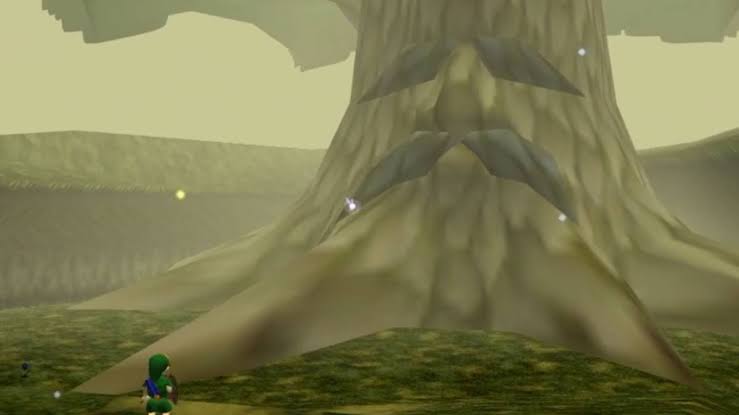
When I finished Link’s first 3D adventure, the credits rolled, accompanied by a medley of Koji Kondo’s most memorable compositions. As the names of the game’s development team appeared, scenes of Hyrule’s inhabitants rejoicing flashed across the screen, each place and person healed by Link’s (and therefore my) endeavours and exploits.
For the first time in a game, the weight of my actions hit me. It wasn’t something I just played. It was a journey I had been on, with stakes that felt real and consequences that mattered to the people I met. It stirred a gut reaction in me that a video game had never quite managed before. I felt truly heroic.
From that moment, it became my favourite game, and one I have revisited every four or five years, including through its previous makeover on Nintendo 3DS. The Legend of Zelda: Ocarina of Time is a five-star game. It always was, and always will be. Just take a peek at the bottom of the page. You’ll see the stars, right there.
The reasons for my affection are many. The overworld, the characters, the intricate dungeons, the combat, the exploration, the puzzles, the mood, the secrets, the locations. The list goes on. Ocarina of Time is one of those rare games where every design decision complements another, creating something so magical that, in 1998, it felt virtually flawless.
So how do you update a game like that?
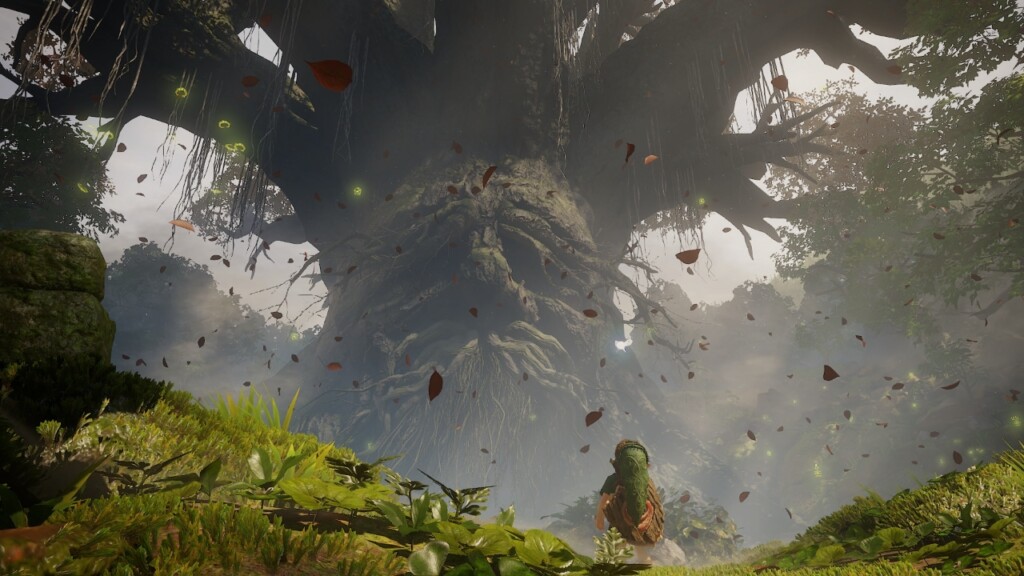
Remaking a game of this stature and influence is daunting. Do you focus on expanding the underlying game design, or on targeted embellishments and graphical upgrades? It’s mostly, but not exclusively, the latter here. The Legend of Zelda: Ocarina of Time for Nintendo Switch 2 updates many things, but leaves the fundamentals largely untouched.
As I mentioned a few months ago, Nintendo tends to treat its games as a core text, and however much its remakes are refreshed and expanded, they nearly always respect the source material. And this source material still stands up today.
This is a handsome, handsome game, but it’s not pretending to be brand-new or designed with 2026 sensibilities. Beneath the new polish, Nintendo is content to let the 1998 game shine through. It’s the same trick it pulled off in 2019 with the Switch version of The Legend of Zelda: Link’s Awakening, but writ large.
While the 2011 Nintendo 3DS remake was a graphical step up from the original, with stereoscopic 3D visuals and helpful dual-screen control enhancements, there was no escaping the feeling that it was a compressed version of the game. Even in its Nintendo 64 form, running at 20 fps on my Trinitron CRT screen, the game had an epic, almost widescreen feel, despite its native 4:3 ratio.
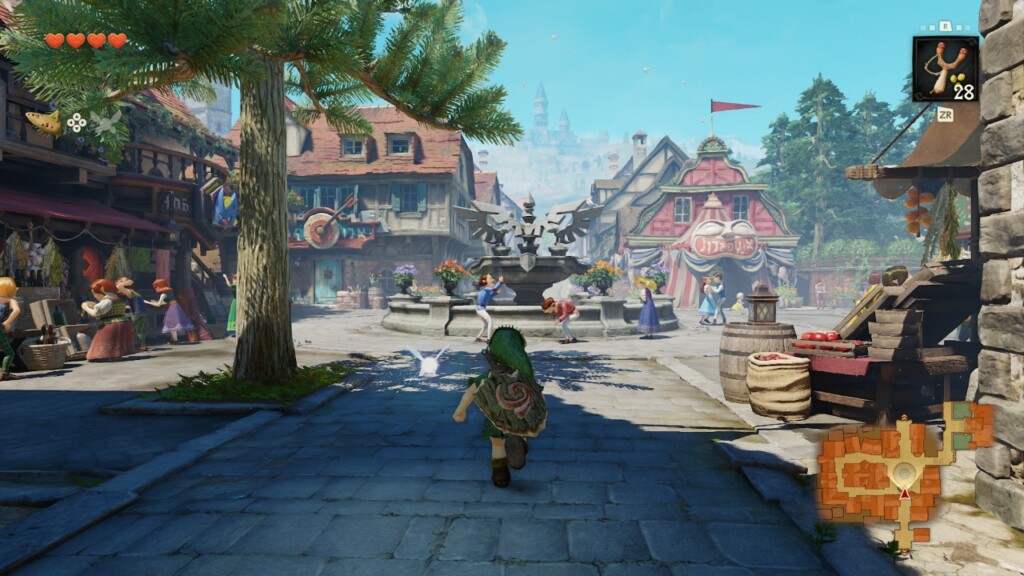
With this release, the game’s impact is restored. Ocarina of Time may not present the largest video game world by today’s standards, but its modest scale is offset by Nintendo’s determination to paint every corner of the world with meticulous detail.
Buildings, environments and previously empty spaces have been gloriously rebuilt. The result is a version of Hyrule that feels solid, physical and elemental. Each location is rich in colour, sometimes luridly so, with atmospheric effects and character. Kokiri Forest now teems with undergrowth and floating motes of pollen that catch the sunlight. The Forest Temple is reborn as a haunted mansion with a tiled sanatorium in the basement, Zora’s Domain shimmers with reflected light, and Death Mountain is a boiling cauldron.
I can’t think of a Nintendo-made game that has ever looked quite so lavish.
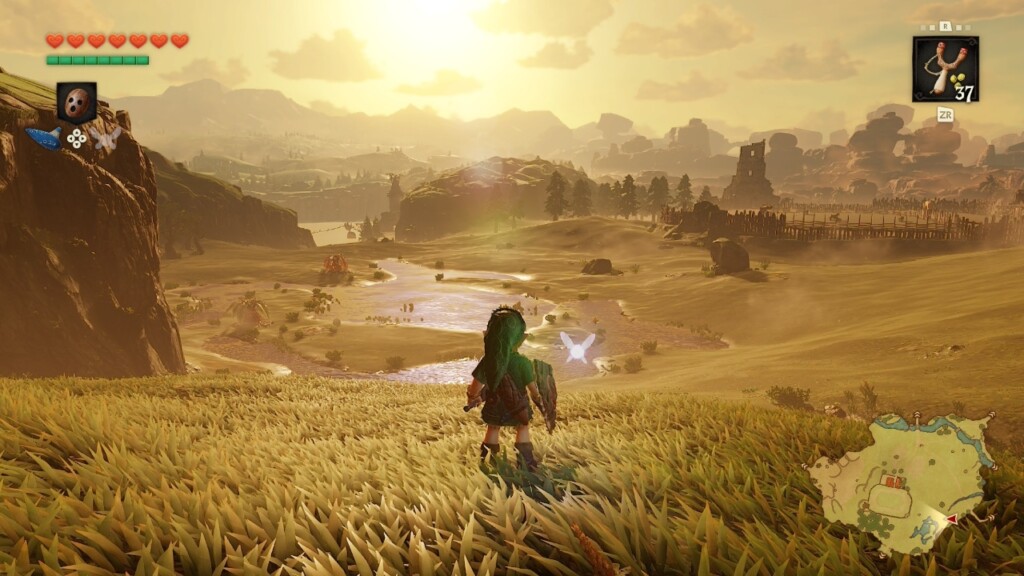
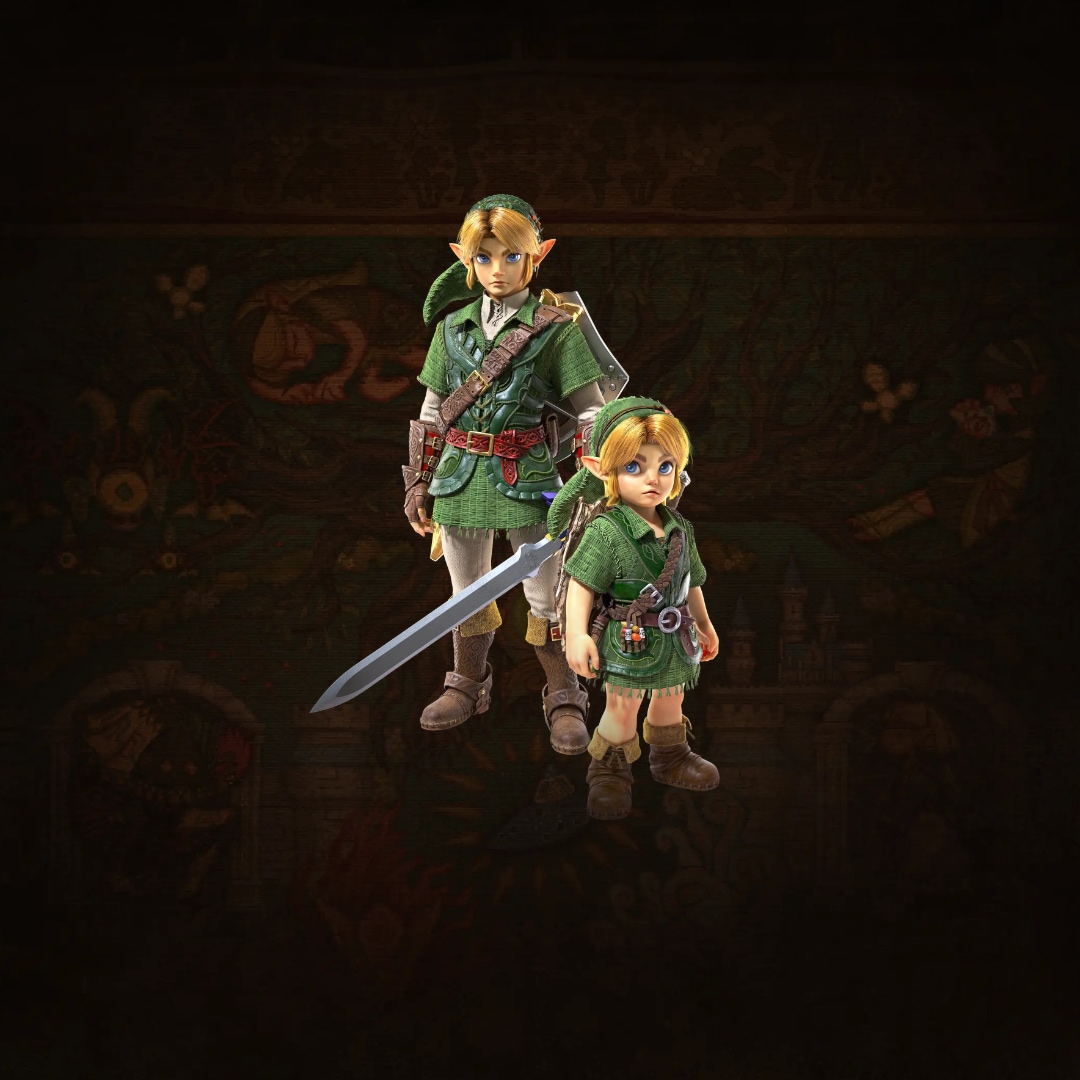
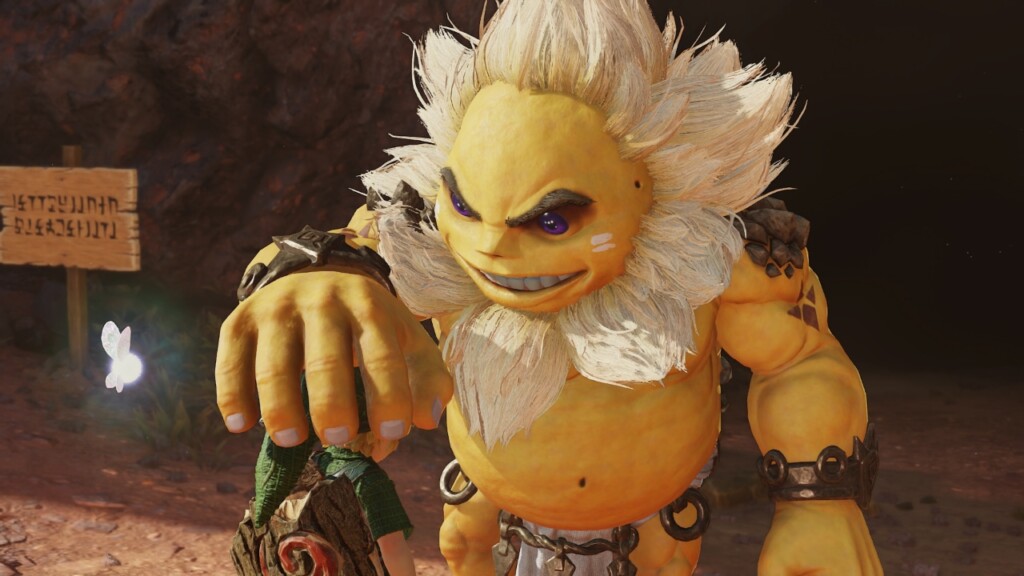
The treatment of the game’s characters is similarly impressive, and any pre-release worries are quickly dispelled. The cast comes to life in a way that respects the original art style, with a physicality akin to puppets or figurines. The result looks modern, but it also retains the emotional character of those simple polygonal models.
Beyond the visuals, there are a host of other tweaks and improvements that sand down rough edges, provide more narrative context and streamline pathfinding. Controls have been elegantly simplified, the camera is now tied to the right stick, and there’s the much-vaunted addition of a jump button. A new Threads of Time feature shows your progress and offers not-so-subtle hints about where to go next. Business Scrubs can be summoned to provide supplies when you’re in a pinch. And the Hall of Fallen Foes lets you study the game’s menagerie of creatures up close and revisit its excellent roster of boss battles.
The remake also features a sublime orchestral soundtrack, which adds texture and emotional range to Koji Kondo’s iconic score. The voiced cutscenes are a mixed bag, though. Link is mercifully silent, but some of the other characters are a little too ‘gee whiz’ for my taste. A switch to the Japanese voice-over is a quick fix for that.
And praise the Great Deku Tree! Navi, so long the bane of everyone’s patience, is now genuinely worth listening to, with funny asides that call out elements in the environment. “So big!” she says on approaching Lord Jabu-Jabu for the first time. “Twisty!” she exclaims as you navigate the churning corridors of the Forest Temple. She’s sharp and witty, fleshing out the adventure just enough without becoming overbearing.
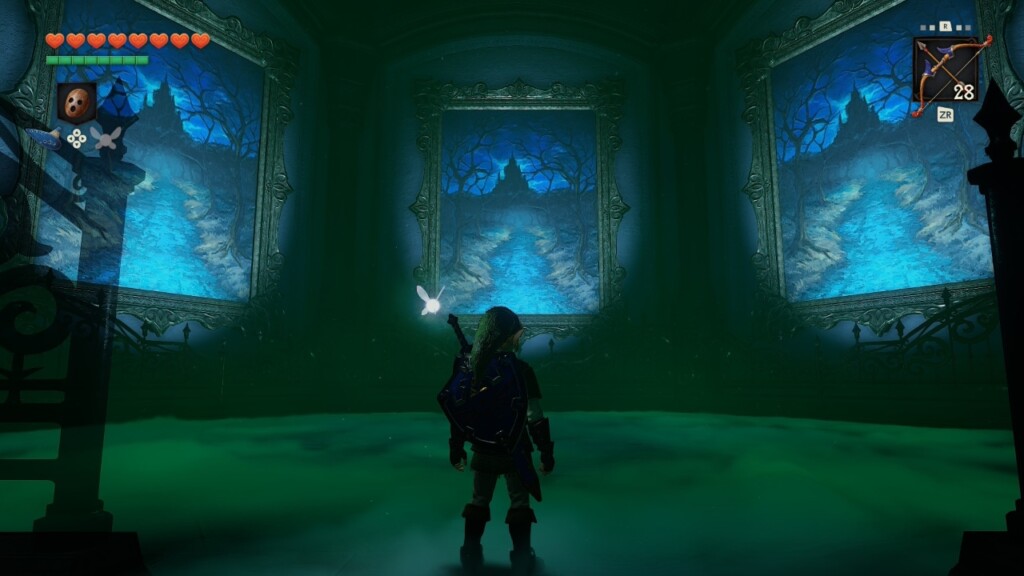
There are, however, obvious remnants of the game’s age in interactions and design choices intended to help players in 1998 adapt to a sprawling world in three dimensions. They don’t detract from the experience, but in a post-Breath of the Wild world, being taught how to navigate and aim feels quaint, to say the least.
The game also seems much faster-paced than it did in 1998, whether that’s my muscle memory keeping me on the right path or simply the fact that most games of this nature have since become bloated by space and busywork. It feels strange to call Ocarina of Time concise, but it’s focused, more linear and more authored than newcomers might expect. That doesn’t diminish its 1998 achievements, of course. This adventure is built around experimentation and exploration, and while it may be compact in comparison to Breath of the Wild and its sequel, it remains sweeping in scope and ambition.
Because it doesn’t have to present such a seamless environment, Ocarina of Time has freedoms that its modern counterparts don’t necessarily enjoy. Its consciously segmented structure allows the game to zigzag between dramatically different environments, tones and ideas, from the deliciously squelchy belly of Jabu-Jabu to the harsh Gerudo Desert, without having to maintain the geographical and systemic consistency of today’s huge open worlds.
The focus is instead on the largely self-contained regions and the dungeons within them. And those dungeons still amaze. Their construction, variety and execution set the standard that the series still strives to equal, and sometimes doesn’t. Each one finds new ways to play with space, navigation and perspective, and the results are just as startling now as they were in 1998, whether it’s the Water Temple’s shifting water levels or the Spirit Temple’s use of light, reflection and time.
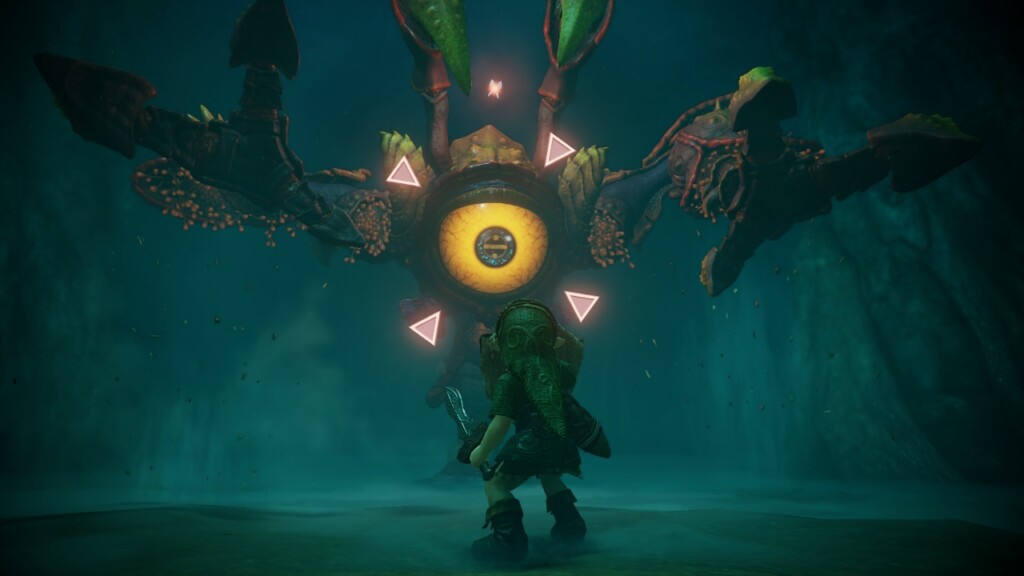
The original’s macabre tone persists and the new treatment heightens a Brothers Grimm-like aesthetic that the series has largely eschewed in recent entries. Bizarre characters, such as the oily ranch owner Ingo, the potion-peddling granny and the delightful Poe Sisters, imprint themselves on the memory in garish detail.
The sense of melancholy also lingers and, for me, extends beyond the screen. Just as Link has to reckon with the passing of time when he pulls the Master Sword from its stone, so I reflect on the 28 years since I first played the game, wondering where the years have gone and how the world has changed.
Thankfully, The Legend of Zelda: Ocarina of Time remains a constant. The remake and the original stand side by side and are in conversation with each other. Young Link and Adult Link. Old Ocarina of Time and new Ocarina of Time. The new couldn’t exist without the old, and the old speaks to the future it helped create.
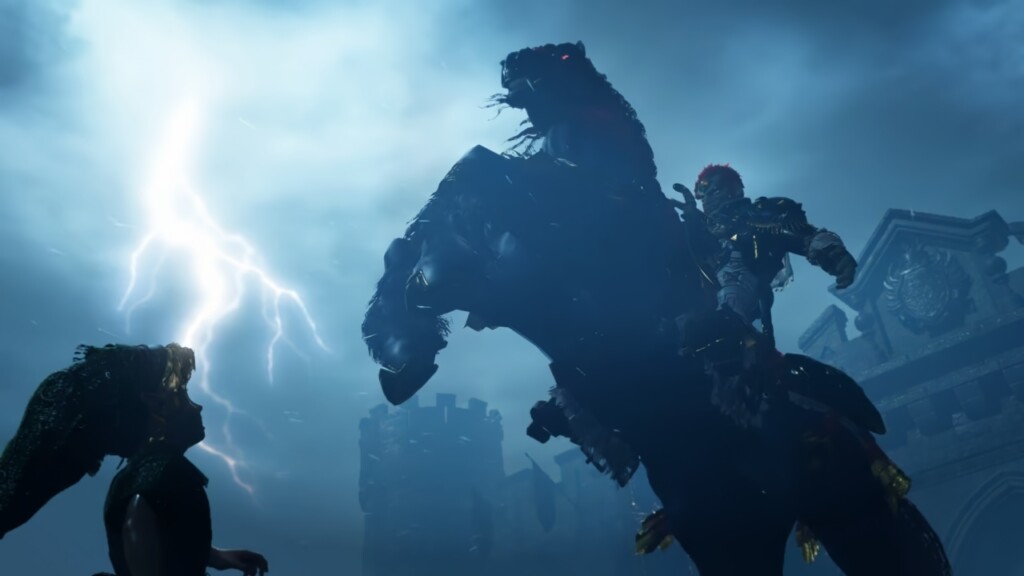
As I reached the end credits once more, those same heroic feelings washed over me. There are a thousand things to praise in Ocarina of Time, but no other game has ever made me feel this way, again and again and again.
So, another five-star review for what I still consider the best game of all time. The N64 original deserves the score because of its design, ambition and emotional impact. This remake deserves it because it preserves those timeless qualities while giving the game a dazzling new presentation.
As for what comes next? Well, an update of The Legend of Zelda: Majora’s Mask seems inevitable, especially given the newly added nods to Termina. Franchise steward Eiji Aonuma has also said that the release of the Nintendo Switch 2 version was, in part, an effort to educate Nintendo’s young designers. And if they draw inspiration from this remake, Ocarina of Time’s influence on video games may be far from over.
Game: The Legend of Zelda: Ocarina of Time
Platform: Nintendo Switch 2
Developer: Nintendo
Publisher: Nintendo
Release Date: November 5, 2026