



At GDC 2026, veteran game designer Don Daglow reflected on his career and the lessons he learned along the way.
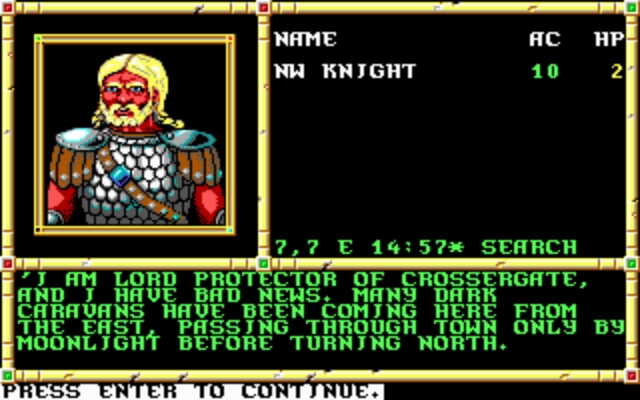
It’s no surprise that Don Daglow addressed a packed room of attendees at this year’s Game Developers Conference. He is an Emmy recipient and a three-time Inc. 500 CEO who has held creative and leadership roles across every generation of video game consoles since 1980. His career includes pioneering the first graphical MMORPG, the first use of camera angles in video games, and some of the earliest work on chatbots. From Neverwinter Nights and Utopia to EA Sports, the influence of his work is undeniable.
It’s also no surprise, then, that Don Daglow is the long overdue recipient of the Lifetime Achievement award at this year’s Game Developers Choice Awards. And before receiving the honour, he delivered a Master’s Session talk that served, not as a victory lap, but as an honest account of how a career actually survives.
Don Daglow has weathered every storm. He has been laid off. He has gone bankrupt. He has watched publishers collapse mid-project, and seen games he loved find no audience. But he is still working, still designing, and has a new game on the horizon. At the heart of his talk was a question posed by a friend: How did you last this long?
Art loves you back
Daglow’s answer is not a magic formula, but something closer to a philosophy, and it begins with the ocean. He argues that there is a clear line between the craft of making games and the business surrounding them. The two are not the same thing, and conflating them, he says, is one of the most damaging mistakes a developer can make.
“I believe that when you practice any art form, art loves you back,” he says. “Just the act of creating the art gives you a fulfillment that runs very deep.”
The challenges, he suggests, come at the point where art and economics collide.
“In my view, business is the ocean. The arts and crafts we practice are vessels, the craft that we sail on that ocean,” he says. “My attitude, and I have to remind myself about this sometimes, is that sailors will curse the storms, they’ll curse the ocean, but it doesn’t affect their passion for sailing.”
Unlike art and creative expression, Daglow argues that it is important to remember that business is not capable of loving you back.
“It’s a force of nature. The ocean obeys the laws of physics, business obeys the laws of economics,” he says. “That’s why we have to sail it as an environment that challenges us.”
What hard-earned experience gives you, eventually, is the ability to separate the two. The storms are real. The calms are real. But neither one touches the thing that put you on the water in the first place.
“I’m not going to let anybody keep this away from me,” Daglow says. “I don’t care what happens to the business, I’ve been laid off, I’ve gone bankrupt, I’ve done all sorts of things. I don’t care, this is our craft, we’ll keep doing it.”
That conviction is easy enough to hold, but surely harder to maintain in the shipwreck of a failed project.
You are not diminished
Daglow refers to two separate advisory engagements, both of which involved working with talented people whose games were not successful. In the first, a creative lead had completed work Daglow considered genuinely excellent. The game shipped, but like so many, it didn’t find an audience. The artist was understandably distressed about being attached to something so quickly dismissed.
Knowing the quality of the work firsthand, Daglow was confident in his reassurance. The game’s disappointing reception said nothing about the quality of their contribution. “You did great work,” he recalls saying. “It doesn’t mean your work wasn’t special.”
Daglow says that even in failure, you should not feel diminished. You must learn the lesson, take the opportunity to grow and become a better artist or a better developer. Never take the feelings of sadness and disappointment about a game’s commercial or critical reception and turn it on yourself. It’s unfair to your talent and efforts.
In another example, Daglow describes working with a small team who had built a good game and executed their vision cleanly. However, the shipped title failed to hold an audience in a crowded market. Again, he found himself having to reassure a team wrestling with disappointment.
“I just said, you guys are a great team. This doesn’t make you any less of a great team. You guys are fantastic at what you do. This does not change that.”
Daglow says that the lesson is that things can go wrong in what we do. Like the ocean, the games industry is not predictable. Not every game, however well-made, can be a success. It is important to free yourself from being weighed down by external forces and the feelings of failure.
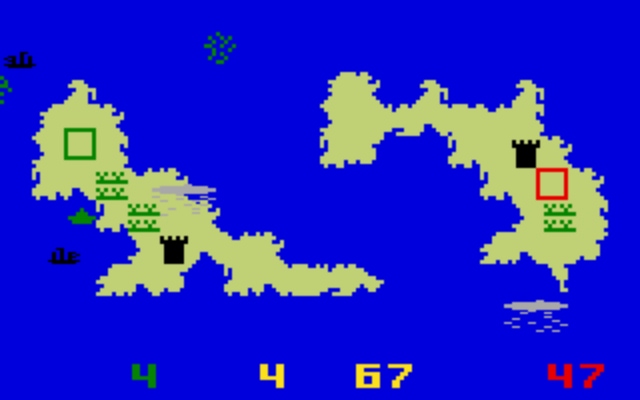
Daglow has seen enough cycles, enough great work disappear and enough unlikely games succeed, to know that a single outcome is never the final verdict on a person’s talent.
“We have to be able to free ourselves from having stuff weigh us down,” he says. “You have to set yourself free from this and then take the better, wiser you and use that you on the next game.”
This is, ultimately, what fifty-five years in games gives you. You do not have immunity from the storms, but the hard-earned certainty that the ocean is doing what the ocean does. The vessel, and the person sailing it, remain their own.
Image: GDC/Don Daglow