



In his talk at GDC Festival of Gaming 2026, Despelote creator Julián Cordero spoke about the inspiration behind the game and how the sounds of home became integral to its identity.
When Julián Cordero moved to New York, he noticed, slowly, that football had stopped mattering. He still watched matches and still played occasionally, but the feeling around the sport had changed. Something that had been so central to his life in Quito, Ecuador, had gradually become peripheral.
“Even though I still played it and watched it from time to time,” Cordero recalls, “I realised that I really missed it. Partly because it just isn’t as culturally important and big here as it is in Ecuador.”
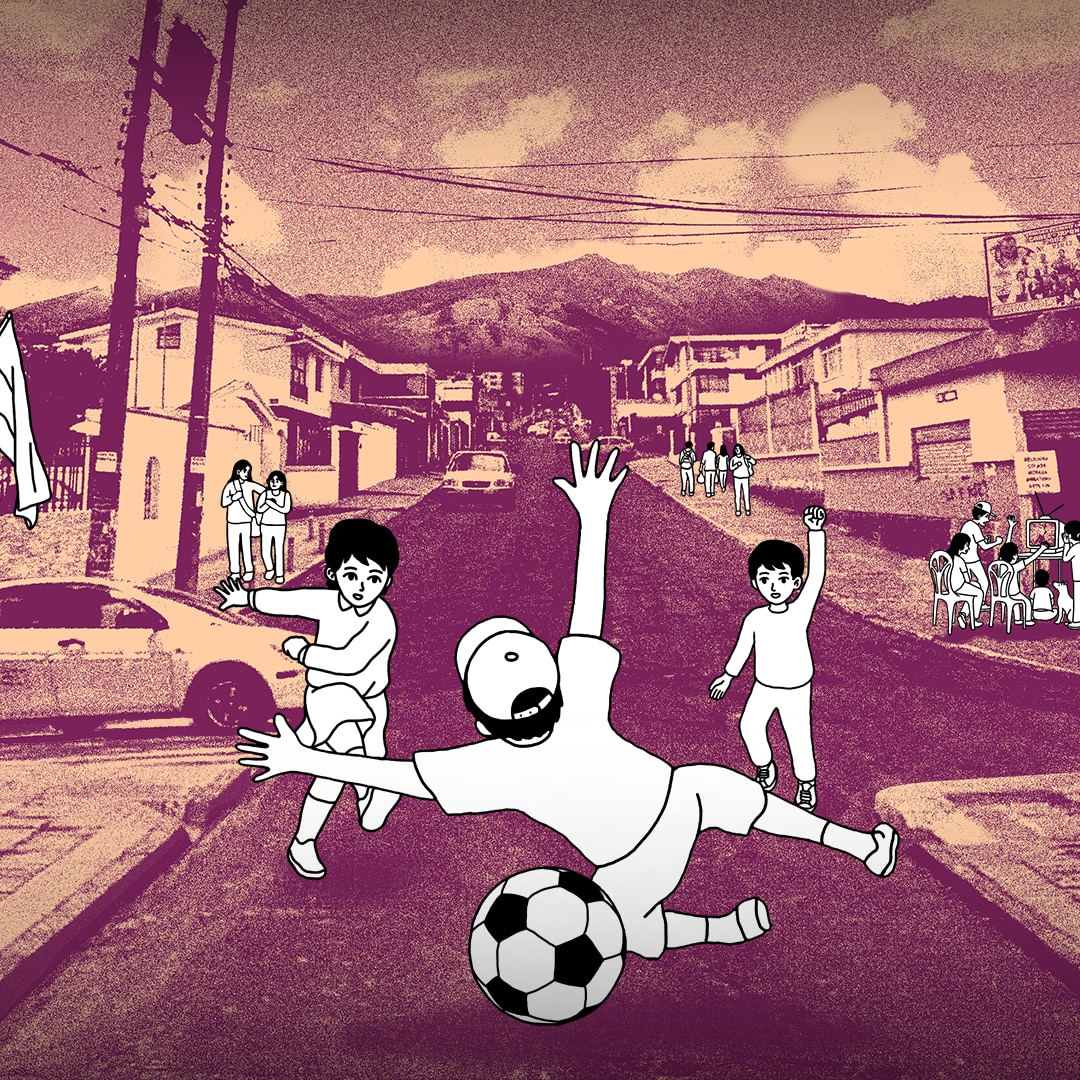
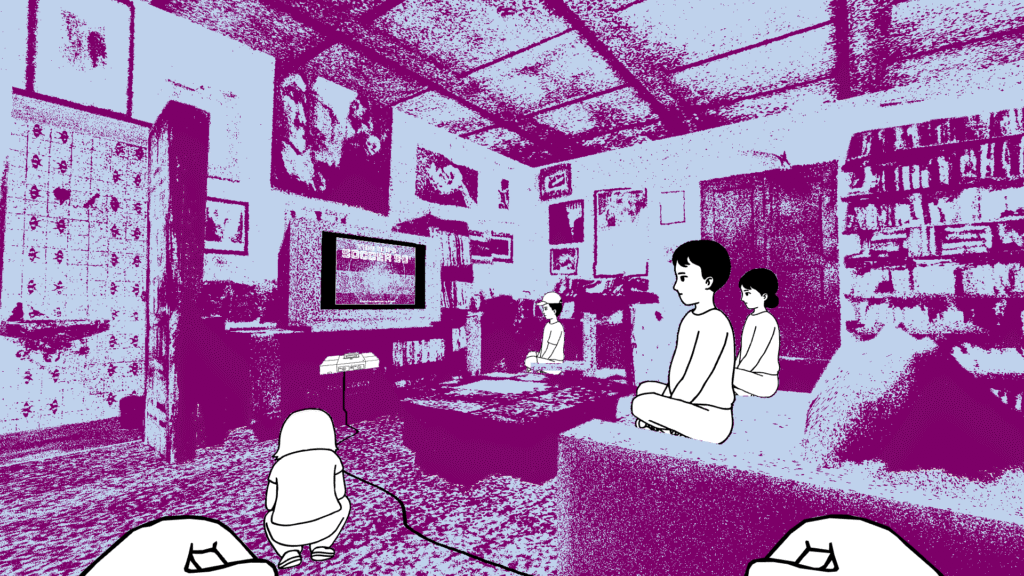
That realisation sits at the heart of Despelote, Cordero’s autobiographical game about being an eight-year-old in 2001, kicking a ball around a park with friends as Ecuador’s national team prepares to qualify for their first ever World Cup. In many ways, the game became a way of reconnecting with that feeling: of football as something lived rather than watched, and of Quito itself.
A universal language
Cordero’s original design instinct was to strip out dialogue entirely. Football, he reasoned, is a universal language.
“You can really get to know somebody by kicking a ball back and forth with them without saying a word,” he says. “And there are so many social dynamics around it in real life.”
The early prototypes of Despelote reflected this. You explored a park, passed the ball around with friends, and that was the communication. Cordero liked it, but it had a ceiling.
A poster created early in development showed two teenagers mid-conversation. Cordero wanted to reach that emotional territory, but couldn’t figure out how without moving away from his original intent. At the time, he says, he was “deeply against having dialogue because I felt like it would undermine this idea of soccer being a universal language.”
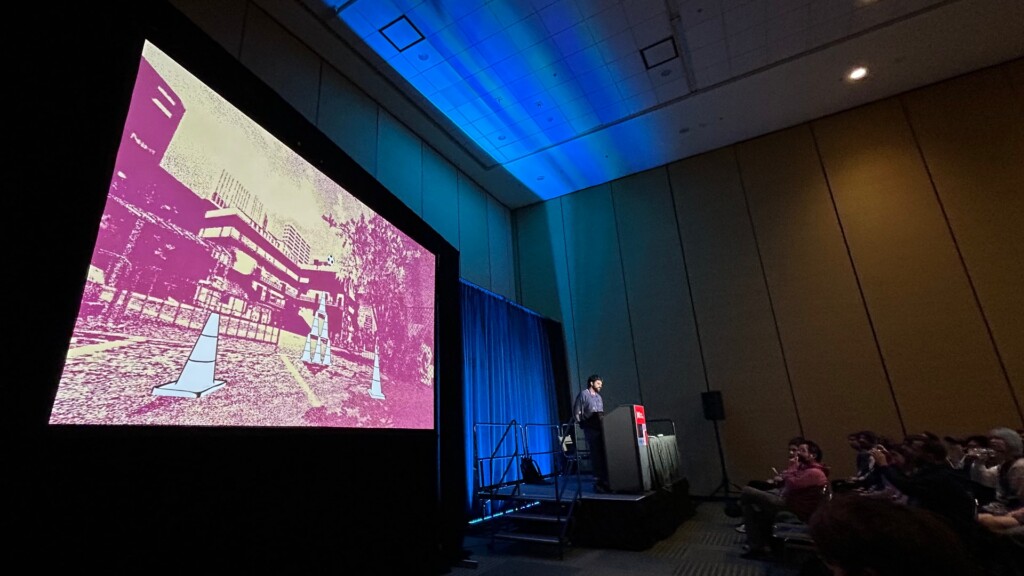
It was producer Gabe Cozillo who finally convinced him to try, under strict conditions. Cordero wouldn’t write a word of it. Everything would be improvised, drawing from conversations and interviews the team had already been conducting.
“Ideally, this dialogue would exist only in the background,” Cordero explains, “bringing in some of the same context we were getting from the interviews but in a more seamless way.”
The first test was simple. Cordero gathered some friends in Ecuador, hit record, and let them talk. Then he dropped the audio into the game, right next to where the player kicks the ball around. The effect caught him off guard.
“For me, hearing my own friends in Ecuador talk about their lives inside of the game while I was sitting in my apartment in New York, that made me feel warm,” he says.
More importantly, it clarified something that had been nagging at him since the project began.
“I realised that what I had been missing about soccer was not so much the sport itself, but playing it with my friends back home. I missed the community and the specific context that surrounded soccer throughout my life.”
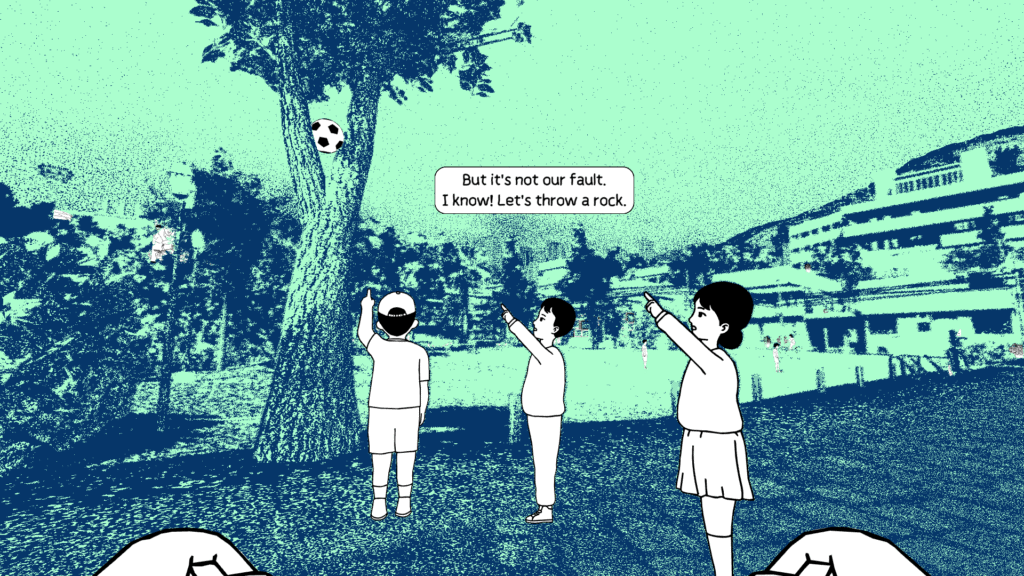
It also solved the dialogue problem he’d been wrestling with. The conversations, playing out nearby while you kicked a ball around, didn’t feel like they were undermining the idea that football was a universal language, as they occurred on a background plane and remained unrelated to the player’s actions. Cordero describes it as “a form of eavesdropping that felt natural because we do it all the time as people that live in cities.”
From there, the team committed fully to improvised dialogue throughout the game. Friends and family were given loose scenarios – arguments about politics, memories of the 2001 economic crisis, excitement about the national team – and recorded simply chatting among themselves.
“Because everyone brought their own memories of 2001,” Cordero reflects, “the result was richer and more surprising than anything we could have scripted.”
The conversations also work differently in a game than they would in a film. They meander, the way real everyday talk does. Nobody is forcing you to follow them if you want to keep playing. That freedom, he points out, is something specific to the medium, and different, he notes, “to how linear media like film or books work.”
The sounds of the city
When sound designer Ian Berman came to Quito to record the dialogue sessions, he also spent time simply listening to the city. He and Cordero visited neighbourhoods and parks across town, set up a specialist microphone, “and recorded everything, and basically just waited.”
What struck Berman most wasn’t something Cordero would have thought to mention.
“I didn’t realise how much you tune out certain sounds that are so present all the time,” he admits.
Across Quito at night, you can hear dogs barking—not just nearby dogs, but the sound echoing and bouncing across the whole city, audible from almost anywhere. Cordero had grown up hearing it. He had stopped hearing it long ago, but Berman heard it immediately.
“It was really great to have Ian explore Quito looking for sounds,” Cordero says, “because he would hear the city in a completely different way to me.”
That outsider ear was invaluable.
“The first time I heard some of the ambiences in the game, I was in New York, and hearing the specific bird calls and the echo of the dogs barking at night really brought me back to Quito in a way that is hard to put into words.”
It was specific. It didn’t evoke somewhere like Quito. It evoked Quito.
A collage
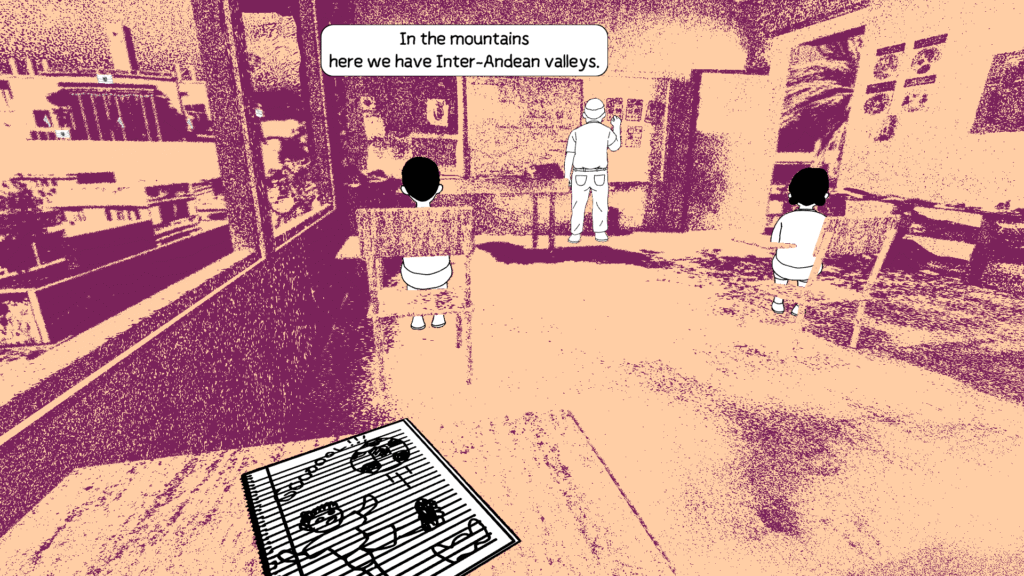
Despelote is not a one-to-one recreation of Quito in 2001. Cordero describes it as a collage, made from different ways of capturing the world. Alongside the improvised dialogue and ambient recordings, the team also used 3D scans of real buildings, textures drawn from photographs of the city, and real archive football footage playing on in-game televisions.
“I was able to document all these places that I miss so much, living in New York, and reminisce with my friends about the fun things we did as kids, and watch tens of hours of footage of the Ecuador national team playing soccer over the years, and get people to tell me what it was like when I was too young to remember.”
None of that was planned at the start of Despelote‘s development. It arrived through the process.
“I was able to find all this meaning through this approach,” Cordero says, “and whether I intended it or not, it is embedded deep into the final result.”
Read more reports from GDC Festival of Gaming 2026.