



What is the difference between 100 and 101 hit points? The answer, according to Obsidian Entertainment’s Robert Donovan, is nothing. Unless a player can actually perceive it.
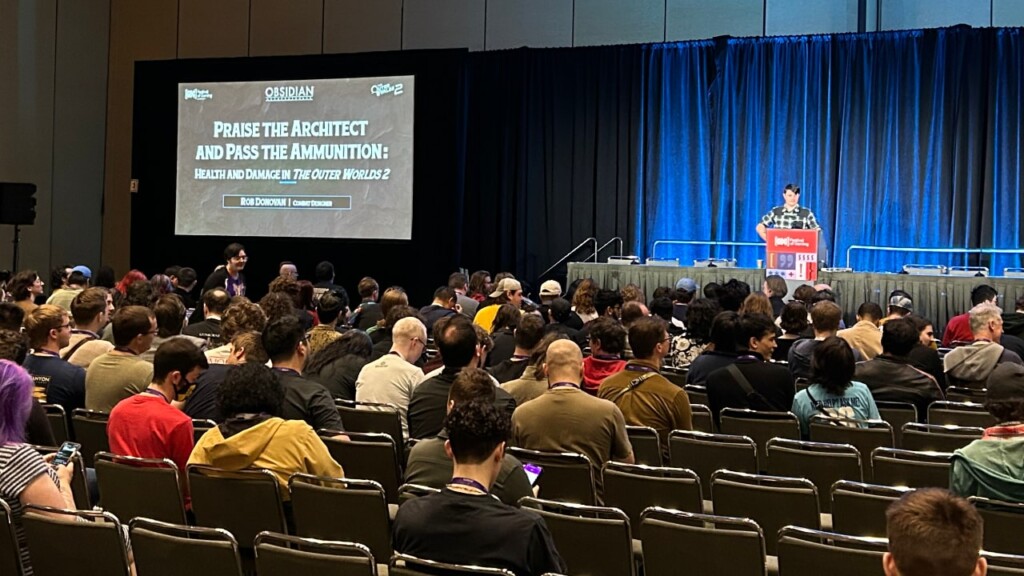
That simple observation was at the heart of Donovan’s talk at GDC Festival of Gaming: Praise the Architect and Pass the Ammunition: Health & Damage in The Outer Worlds 2.
During the making of The Outer Worlds 2, Donovan says the objective for the game was to make combat balanced, challenging, and fun. The target was deliberately unglamorous, he says. “Weak things are weak and strong things are strong.”
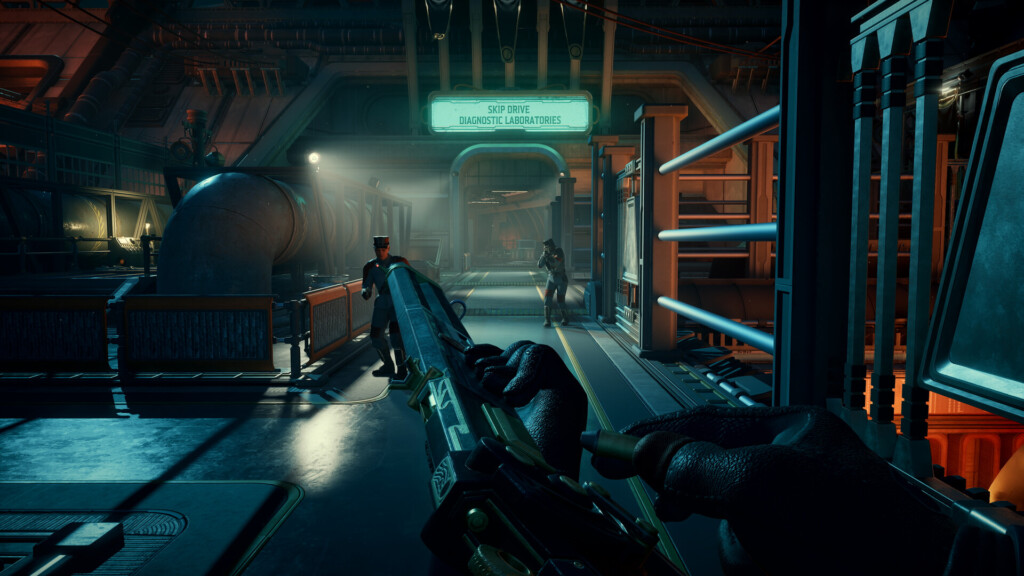
Donovan and his team inherited a benchmark from 2019’s The Outer Worlds, specifically the opening region of Emerald Vale. The area had earned a reputation internally for getting the combat balance just right with weak enemies that go down quickly and strong enemies that don’t. The gap between them felt meaningful and the goal was to maintain that feeling throughout the game.
To start, Donovan says he did what any methodical systems designer would do. He mapped the hit points of every combatant in Emerald Vale, fixed the damage number in place as a constant, and built five regional tiers of escalating difficulty around that anchor.
“Let’s take the Emerald Vale and just use it as our starting point,” he says. “Even if this is a made-up thing and we’re going to move away from it over the course of development – spoiler alert, we will – but this is a good place to start to get some numbers down, to get some game feel going.”
It was a logical and structured approach. But it turned out to be wrong.
By November 2023, with development in full flight, playtests were returning a consistent and deflating verdict. The game was too easy. It wasn’t broken, and it wasn’t unplayable, but it sat in what Donovan, borrowing from Csikszentmihalyi’s Flow theory, describes as the boredom zone.
“Boredom is what they were telling us they were feeling,” he says.
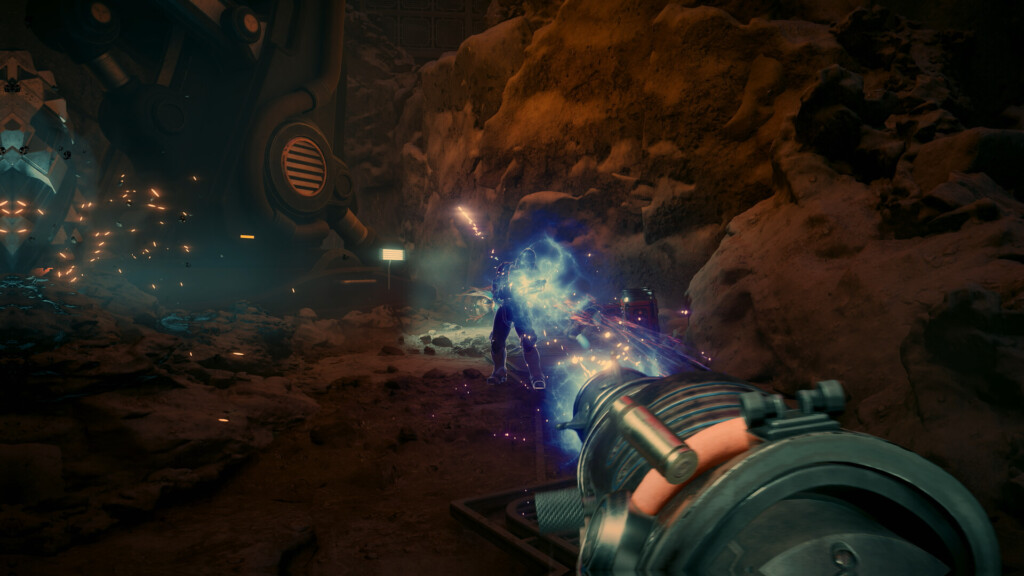
The reason was almost embarrassingly straightforward. Donovan had fixed damage at 17 – the output of the starting pistol – and built his hit point targets around that number. But players don’t stay at the starting pistol. They levelled up, found gear, and grew. By the time they were moving through the opening region properly, they were dealing closer to 36 damage.
“The hits to kill that the player is actually perceiving just fell off a cliff,” he says. “So no wonder we were getting feedback that the game was too easy because even in the very first region, the player was rapidly outpacing what we thought they were going to be capable of.”
There was also a more fundamental problem baked into how the team had been thinking about numbers at all.
“Is 993 damage a lot? I mean, it’s kind of. I don’t know,” Donovan asks, describing a weapon test in which his gun was doing just under a thousand damage per shot. “If our enemies have 10,000 hit points, then 993 is just kind of a scratch.” The numbers, in isolation, meant nothing. “I’m going to claim that hit points are meaningless without knowing damage, and damage is meaningless without knowing hit points.”
The fix required a conceptual shift more than a numerical one. Donovan needed a way to talk about balance that lived closer to human experience than to a spreadsheet. The solution was based on hits to kill, the number of times a player needs to pull the trigger before an enemy stops moving.
The reasoning was grounded in something real. “In a real-time game like ours, our players are going to be trying to aim, shoot, use gadgets, fight cover, throw grenades,” he explains. “Various things are going to be happening that are going to fill their brains with what’s called a cognitive load.” In that state, the difference between 100 and 101 hit points is genuinely imperceptible. The difference between killing something in one hit versus two is not.
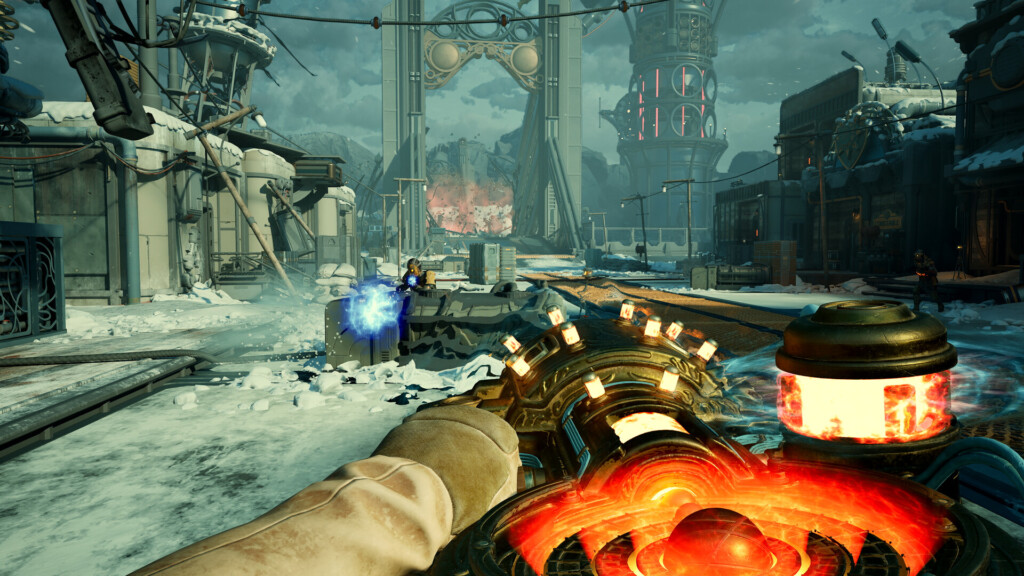
Hits to kill, in other words, wasn’t just a design tool. It was a way of making the game’s underlying logic legible to the person playing it. “Hits to kill is a way for a designer to abstract away all the inputs that are going into the combat experience and make something that is legible to the player,” Donovan explains.
The team had already built a controlled sandbox where the player couldn’t level up and had access to only three weapons. Through testing, they landed on 88 as the correct hit point value for the prologue’s standard enemy.
“That’s a strange number,” Donovan admits. “I would never pick that up.” But given the damage outputs of the pistol, the repeater rifle, and the melee knife, 88 produced the right number of hits to kill across all three playstyles.
“We got the right number of hits to kill for this guy. It felt right for our game.” That feeling became the new target, re-applied across every tier.
After each internal playtest, Donovan circulated questionnaires asking developers to rate both fun and challenge, then presented the results back to the team. The hit point values crept upward. “We never really found a spot where the game was too hard,” he notes. “We always erred on the side of starting low and raising.”
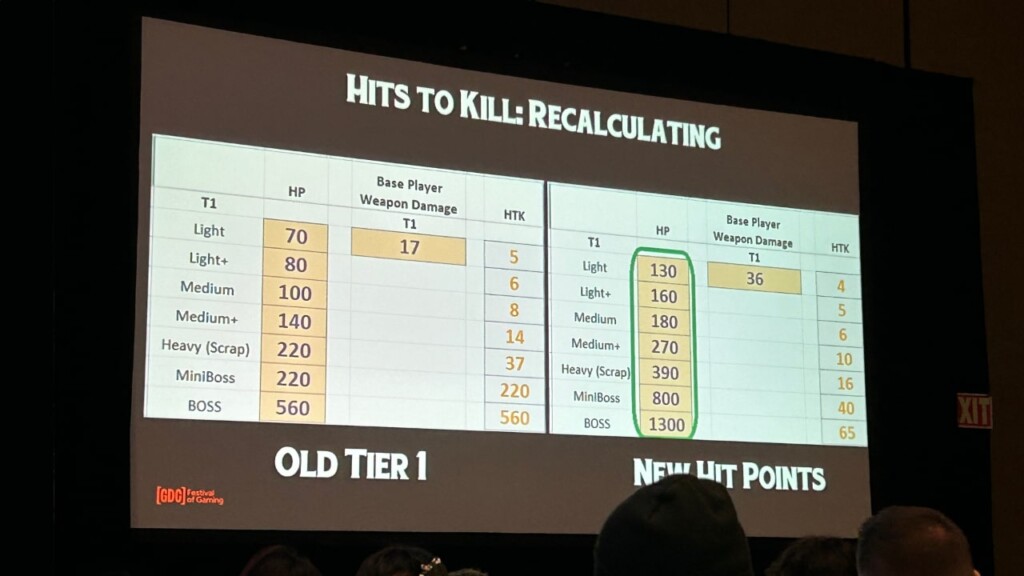
The needle kept moving, right through to a last-minute boost to the final tier because the climactic boss fight felt insufficiently climactic. “We put our thumb on the scale and we made it harder,” he says. “Arguably, we didn’t make it hard enough.”
Did Obsidian succeed in making The Outer Worlds 2 balanced, challenging, and fun? “I think we did a pretty good job,” Donovan says. “The game is going to be telling you what it wants. Listen to it, and use hits to kill as a lens towards balancing your hit points and damage.”
Read more reports from GDC Festival of Gaming 2026.