



The Game Developers Conference returns with a new name and a significant shift in direction.
After a difficult couple of years for the industry, marked by persistent concerns about cost, accessibility and safety, organisers have rebranded GDC as the “GDC Festival of Gaming.” The traditional conference remains at its core, but the event now positions itself as a wider celebration of the game-making ecosystem.
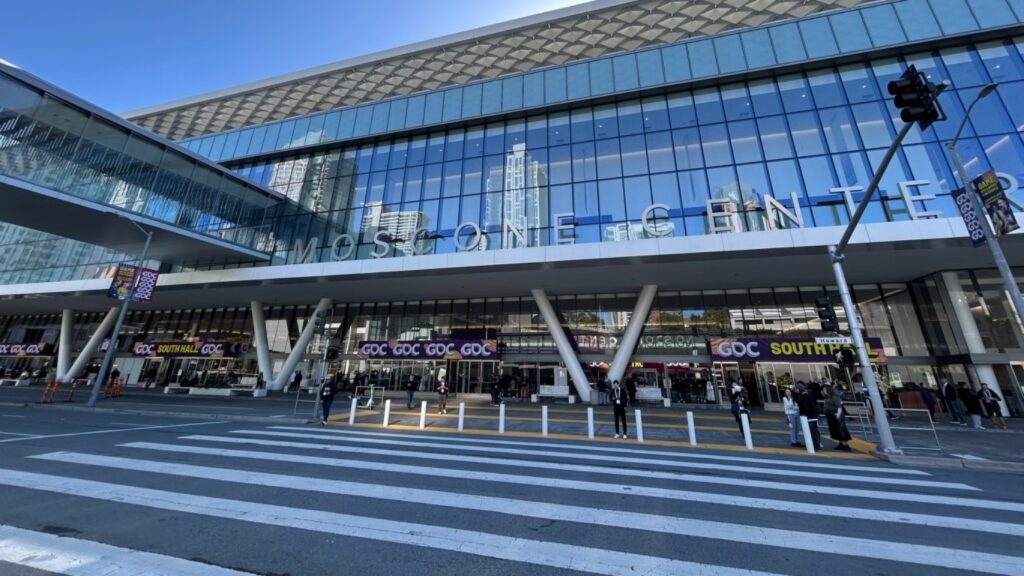
This positioning is deliberately broader and, hopefully, it’s not purely cosmetic. GDC is expanding beyond the Moscone Center with more official evening programming and offsite activations, including a Monday night kickoff at Oracle Park as part of the expanded GDC Nights lineup. The expo floor has also been redesigned as Festival Hall, organised into five themed “neighborhoods.”
The conference’s two major industry awards also return, but are now split over two evenings. The Independent Games Festival Awards, which celebrate the work of the best indie studios and games, are held on Wednesday evening, while the Game Developers Choice Awards, which honour the industry’s most innovative games and development teams, follow on Thursday.
Most importantly, the pass structure has now been overhauled in an effort to improve accessibility. GDC 2026 consolidates its ticketing into two main passes: a Festival Pass (which provides access to all sessions and keynotes) and a higher-tier Game Changer Pass, which adds perks including lounges, a Vault subscription, Luminaries access, and facilitated meetings. Organisers say the redesign is intended to reduce access confusion and make the event more affordable than last year’s top-tier option.
One factor outside organisers’ control is the broader climate around US travel, which has given some longtime international attendees pause this year. It’s worth checking current guidance and advisories for your country before travelling.
Whether these changes are a genuine reinvention or just a fresh coat of paint remains to be seen. We’ll certainly let you know our thoughts in a week or so.
What to see at GDC 2026
Even with the new pass structure, GDC’s schedule is still sprawling, and picking the right sessions is no small task. To help, we’ve pulled together 15 highlights worth building your week around.
‘Clair Obscur: Expedition 33’: Delivering a Wide Scope of Features & Content When You Only Have Four Programmers
Clair Obscur: Expedition 33 shipped with over 30 hours of story content, built by a programming team that never exceeded four people. Tom Guillermin and Florian Torres explain how they managed it, from a deliberate “vanilla-first” philosophy around Unreal Engine to building systems that let designers work without constantly pulling in programmer time.
- Speakers: Tom Guillermin (Sandfall Interactive), Florian Torres (Sandfall Interactive)
- Track: Game & Production Technology, Design
- Day: Monday
GDC Masters: 50 Years in Games and a Legacy for Creators
Don Daglow has been making games since the era of university mainframes. In this inaugural GDC Masters session, he traces a career running from early Intellivision titles through to Neverwinter Nights and beyond, reflecting on what five decades of reinvention looks like from the inside.
- Speaker: Don Daglow (Sausalito Games Inc.)
- Track: Culture & Sustainability, Independent Development
- Day: Monday
Brilliant Jerks: The Cost of Toxic Performance
High performers whose behaviour poisons the teams around them are a familiar problem and one studios too often manage around rather than address. Fleur Marty draws on a real-world case study to examine what enabling that toxicity actually costs, and what decisive action looks like in practice.
- Speaker: Fleur Marty (Gearbox)
- Track: Team Leadership
- Day: Monday
Making Sure Your Game Finds an Audience: Lessons from 28 Years of Sucker Punch
Ten games over 28 years is a track record worth exploring. Sucker Punch Studio Head Chris Zimmerman unpacks the frameworks the studio has built for consistently finding and holding an audience, and some of the mistakes that make it harder than it needs to be.
- Speaker: Chris Zimmerman (Sucker Punch Productions)
- Track: Special Event
- Day: Tuesday
Designing Crush-Worthy Characters in ‘Love and Deepspace’
Love and Deepspace was built around a brief to create characters players genuinely fall for. Art Director Xianzi Feng breaks down how Infold Games translates psychological principles of attraction into a practical design pipeline, from first visual impressions through to the layered personalities that sustain long-term engagement.
- Speaker: Xianzi Feng (Infold Games / Papergames)
- Track: Visual Development
- Day: Tuesday
Turning a “Dead” Genre into a Breakout Hit: The Story Behind ‘Dispatch’
When Nick Herman and Dennis Lenart left Telltale to found AdHoc Studio, they chose to make exactly the kind of game the industry had largely stopped betting on. Using superhero hit Dispatch as a case study, they walk through what it took to bring back lapsed fans without leaving newer players behind.
- Speakers: Nick Herman (AdHoc Studio), Dennis Lenart (AdHoc Studio)
- Track: Narrative & Performance, Independent Development
- Day: Tuesday
Putting the “Friends” in Friendslop: The Story of ‘PEAK’
PEAK began as a month-long game jam in Korea and ended as one of the more surprising indie launches in recent memory. Aggro Crab’s Nick Kaman tells the full story of what the sprint-style development made possible, what it nearly broke, and how the experience reshapes the studio’s thinking about sustainable studio culture.
- Speaker: Nick Kaman (Aggro Crab)
- Track: Independent Development
- Day: Tuesday
Designing the Final Level of ‘Split Fiction’
The final level of Split Fiction pushed Hazelight’s co-op design further than anything the studio had previously attempted. Designer Hannes Gille walks through what made it such a challenge, from the decision to hold the concept back until the end to the techniques used to make two players feel genuinely in sync.
- Speaker: Hannes Gille (Hazelight)
- Track: Design
- Day: Tuesday
Beyond the Logo: Crafting Comprehensive Brand Systems for Games
A logo alone won’t sustain a game’s visual identity across platforms and years. Drawing on their work across major PlayStation and Bungie titles, Alanna Cervenak and Matt Redway dig into what a properly considered brand system looks like in practice, and why the rules change when a live service game is involved.
- Speakers: Alanna Cervenak (PlayStation Studios Creative Arts), Matt Redway (PlayStation Studios Creative Arts)
- Track: Discovery & Marketing, Visual Development
- Day: Wednesday
Decolonizing Play and the Rise of African Game Development (2013–2026)
Returning over a decade after his 2013 GDC talk, Eyram Tawia takes stock of what has changed, what hasn’t, and what the predictions made back then got right. The talk examines how African studios are reclaiming narrative ownership in a global industry and what that shift means for how games are made and distributed.
- Speaker: Eyram Tawia (Leti Arts)
- Track: Culture & Sustainability
- Day: Wednesday
Fixed Wing Flight in ‘Keeper’: Pathfinding, Locomotion, and Animation of a Bird Companion
James Collins details the technical work behind Keeper‘s seabird companion, covering the pathfinding heuristics, spline calculations, and animation collaboration that keep her movement believable without overwhelming a small team’s capacity.
- Speaker: James Collins (Double Fine Productions)
- Track: Game & Production Technology
- Day: Thursday
‘Death Stranding 2’: Making of the Voxel 3D UI Map
Kojima Productions built Death Stranding 2‘s 3D map without falling back on purpose-built artist assets. Ildar Valeev walks through how the team captured and processed world data and developed a voxel rendering approach that hits console performance targets without sacrificing visual quality.
- Speaker: Ildar Valeev (Kojima Productions)
- Track: Game & Production Technology, Visual Development
- Day: Thursday
From Developer to Publisher: The Benefits of a Japanese Studio’s Decision to Pursue Small-Scale Projects
CyberConnect2’s decision to self-publish a small original title was as much about staff development as commercial opportunity. Taichiro Miyazaki reflects on how Fuga: Melodies of Steel became a training ground for junior developers, and why smaller projects may be an undervalued tool for studios of any size.
- Speaker: Taichiro Miyazaki (CyberConnect2)
- Track: Independent Development, Business Strategy
- Day: Thursday
Curating the World of ‘Baby Steps’
Rather than authoring every corner of its open world, Baby Steps uses procedural randomness as a creative foundation. Developer Gabe Cuzzillo explains how that process shaped both the world’s structure and aesthetic, and how two people built an entire mountain traversal game, from large-scale topography down to the individual rocks underfoot.
- Speaker: Gabe Cuzzillo (Independent)
- Track: Design, Independent Development
- Day: Friday
GDC Nights: Developer’s Concert
Away from the sessions and networking opportunities, the Developer’s Concert gives attendees a chance to revel in the artistry of video games. Composer Austin Wintory leads the San Francisco Conservatory of Music in an evening celebrating the craft of game audio with live performances and special guests.
- Host: Austin Wintory
- Day: Tuesday night
See the full GDC Festival of Gaming agenda.
GDC Festival of Gaming takes place at the Moscone Center in San Francisco from March 9–13, 2026. See the Check out the nominees for this year’s Game Developers Choice Awards and Independent Games Festival Awards.