



Last month, the original Dragon Quest was inducted into the Strong National Museum of Play’s World Video Game Hall of Fame. The recognition is well-deserved for a franchise that shaped the foundations of the RPG genre and left a permanent mark on video games.
Until six years ago, I had no idea about the qualities of the Dragon Quest series, or, frankly, of role-playing games in general. I was not an RPG person and I was absolutely comfortable with that fact. The closest I had come was a deep appreciation of the Mass Effect series. But BioWare’s trilogy resonated with me more as a propulsive sci-fi action adventure than as an RPG, and I still think its role-playing elements are relatively modest.
JRPGs, meanwhile, had been a hard nope ever since I picked up a copy of Skies of Arcadia for the GameCube, and bounced off it within 20 minutes. I was completely unable to make peace with the concept of random, turn-based battles. Why is this so slow? Why are we taking turns? Link would have this whole situation sorted in ten seconds. And on to eBay it went, regrettably.
I would talk to fellow Thumbsticks editor Tom about RPGs. He’s a committed Final Fantasy fan and I always promised to give the series a try, but never did.
Then COVID happened.
Like a lot of people, I found myself with time to kill and would play Animal Crossing: New Horizons for long, unhurried stretches, building something small and worthwhile in a world consumed by fear, disinformation, and masked trips to Tesco.
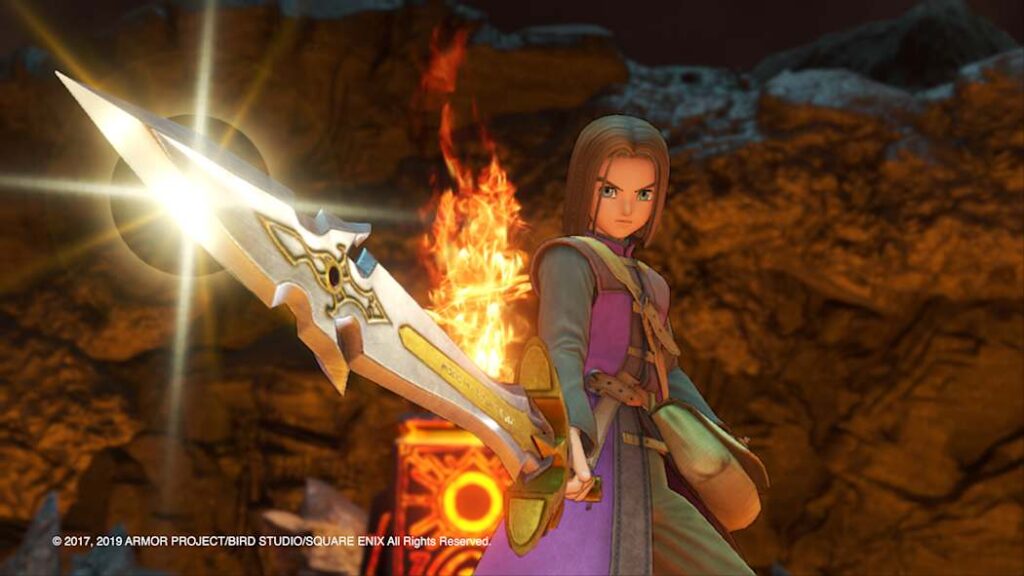
It was in that same spirit of escape that I downloaded the free ten-hour demo of Dragon Quest XI S: Echoes of an Elusive Age – Definitive Edition for Nintendo Switch. It looked bright, colourful, and generous, which appealed to my Nintendo-leaning sensibilities, and seemed worth a try.
Ten hours later, I bought the full game and transferred my save. A hundred hours after that, I was wondering how I had gone my entire life without this series.
During that playthrough, I started to research the series and stumbled across Tim Rogers’ wonderful, now-iconic review of the game for Kotaku. Curious where to go next, I reached out for advice. He kindly replied:
“play dragon quest vii on 3DS, not viii. wait until they do some kind of fancy remaster of VIII for the nintendo switch”.
I mostly took Tim’s advice and I haven’t looked back.
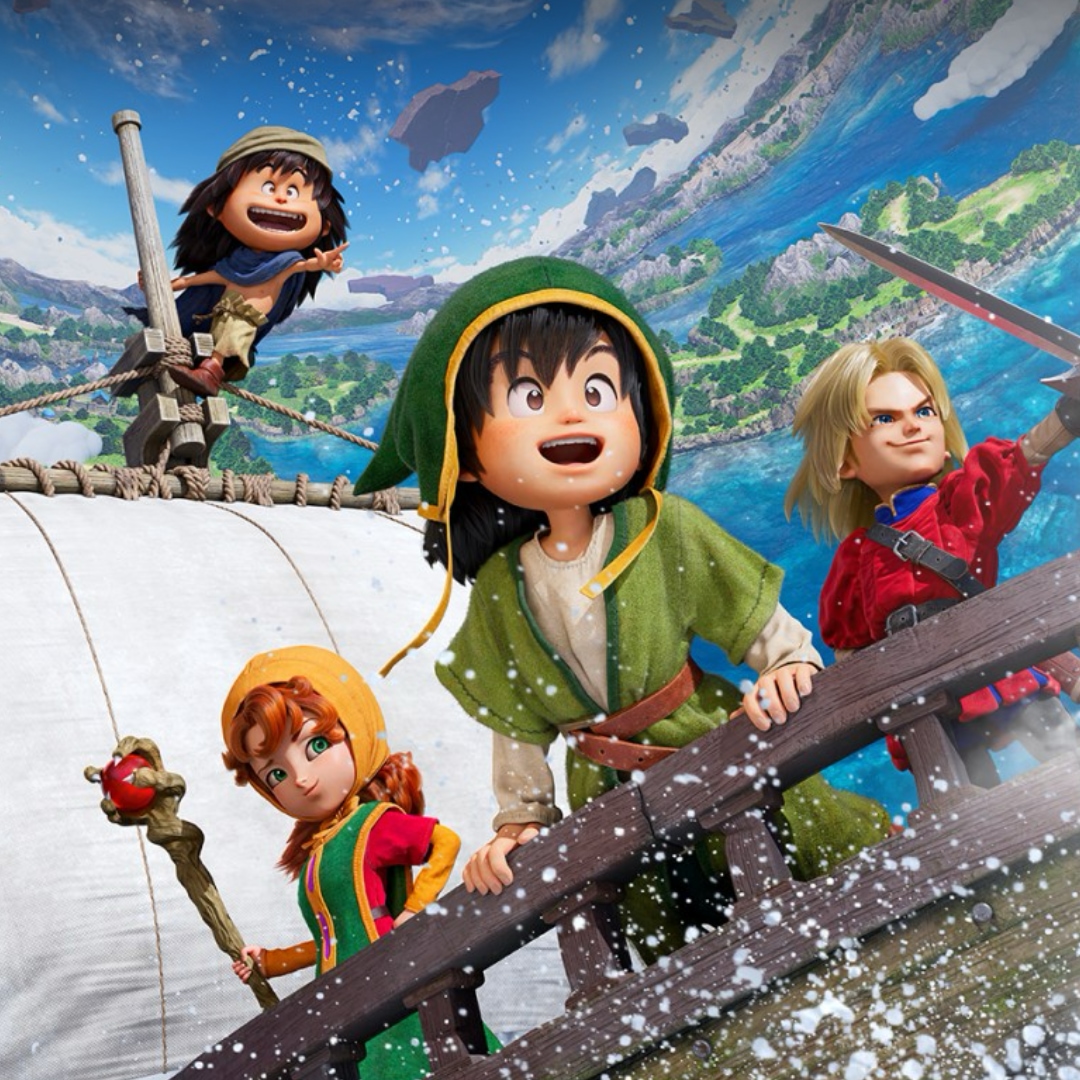
Since then I have played Dragon Quest VII and Dragon Quest VIII on 3DS (sorry, Tim), Dragon Quest XI a second time, Dragon Quest VII Reimagined, and I am currently mid-way through the HD-2D remake of Dragon Quest III. Each one has confirmed what Dragon Quest XI first suggested: this is a series unlike anything else in the medium. But what exactly makes it so absorbing and so fulfilling?
Structure and Spirit
Part of the answer is in the narrative architecture laid down by scenario writer Yuji Horii. Despite their sprawling length, Dragon Quest games are rarely just one long story bearing down on you. They lean toward anthologies, assembled from modest, self-contained chapters that each carry their own emotional weight before folding back into the larger whole. You arrive in a village, discover its particular sadness – beneath the exuberant visuals and tone, it’s an often melancholy series – do what you can, and move on.
This structure means the games never exhaust you, however long they run. You are always arriving somewhere new, and the stakes feel human-sized even when the fate of the world is technically on the line.
Dragon Quest is a series about goodness. There are demons and devils in abundance, dark lords and ancient evils, suffering and sacrifice. But the spirit animating all of it is a belief that people are worth saving and that doing the right thing matters. It’s never merely a story of revenge or rebellion. You are always trying to leave the world a better place. This could tip into the saccharine, but Dragon Quest earns its optimism. It isn’t cynical, but neither is it naive or childish.
The recent evolution of Dragon Quest XII – from the dark and furious-looking Flames of Fate to the sprightly, spirited Beyond Dreams – illustrates that point neatly. The series knows what it is.
Colour and Character
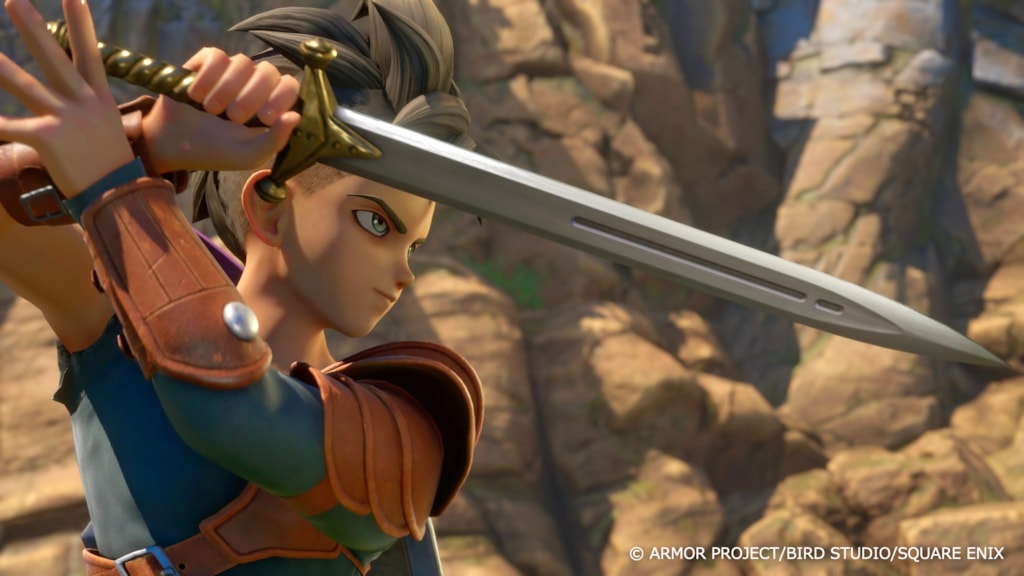
Dragon Quest’s eclectic cast of characters supports this approach. No matter which hero you are playing as, they all share the same qualities of heart and kindness. These are not complicated antiheroes or reluctant ‘chosen ones’ dragged through trauma. They are, almost to a fault, decent people trying to do the right thing. In another series that might feel flat. Here, it’s genuinely uplifting.
The same goes for the supporting cast. Party members like Sylvando from DQXI, Kiefer from DQVII and Yangus from DQVIII are broadly drawn but rich, memorable characters who, as with the best RPGs, become friends through your shared adventures.
These are worlds drawn with affection, for people who want somewhere good to go. It was exactly what drew me to Dragon Quest XI during COVID, and what keeps me connected to the series now.
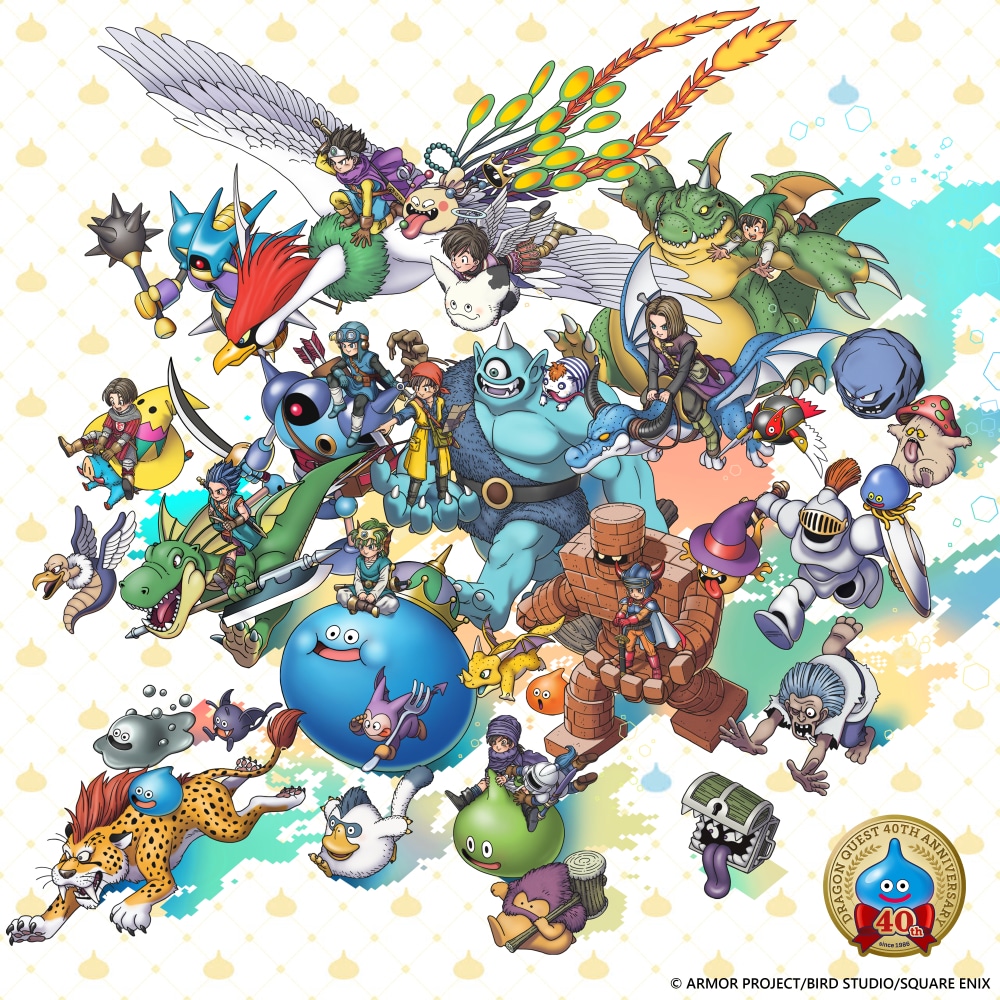
This spirit is reflected in the bold, primary-colour palette of each game. These are bright, saturated, generous-looking worlds, the kind that feel lit from within. Akira Toriyama’s creatures and characters defined Dragon Quest’s visual identity from the very beginning, and his work remains peerless. The recent Dragon Quest VII Reimagined and the HD-2D remake of Dragon Quest III are a testament to how durable and flexible his vision was. Designs sketched decades ago still feel fresh and full of personality, working equally well in 8-bit pixels and fully-realised 3D. Toriyama died in 2024, and his loss was felt across the industry, but his work will outlast all of us.
All of it is underpinned by music that deserves its reputation. Koichi Sugiyama’s scores – familiar themes recurring across decades of games – now have the quality of folk songs, passed down and worn at the edges. They are familiar but somehow never stale. The Overture alone, that brisk orchestral fanfare that opens every mainline entry, does something specific to the nervous system. It says that you are here, and something is beginning. No other series has a single piece of music that functions quite like that.
Dragon Quest is not my favourite series for music – The Legend of Zelda still holds that honour – but no other series so consistently uses its soundtrack as connective tissue, weaving the same themes through decades of games.
It was the music, in a roundabout way, that helped me make peace with the series’ combat. Unflinching Courage, the battle theme for Dragon Quest XI, is an urgent, dangerously joyous composition that evokes the 1960s Batman TV series, of all things. It is the perfect backdrop for the ebb and flow of encounters that reward genuine strategy rather than button-mashing.
The series pioneered the turn-based menu combat format that became the blueprint for the entire genre, with clear, readable choices to fight, use spells and items, or flee from battle. It’s simple enough to grasp in minutes, but deep enough to reward years of mastery. There’s something almost meditative about the rhythm of Dragon Quest encounters, from the chunky sound effects to the way each enemy has its own personality reflected in its attack patterns. The series never chases complexity for its own sake and, over the years, has found success by refining and polishing the fundamentals.
Remake and Reimagine
All of which makes what Square Enix is doing right now both admirable and a little worrying. The intent is clearly to make the entire back catalogue accessible on modern systems. We have recently received the HD-2D remakes of Dragon Quest I, II, and III, Dragon Quest VII Reimagined, and a Nintendo Switch 2 version of Dragon Quest XI on the way. Square Enix is building a lovingly crafted archive of the series. Yet preservation and progress do not always move at the same pace.
Dragon Quest XII was announced in 2021. Since then, it has been reworked from the ground up. At the time of writing it has no release window, just a publisher that appears content to tend its heritage while the game inches through development.
My worry is that a series which moves this carefully through its own history may not be moving fast enough for its future. Fans have begun to ask openly whether Dragon Quest risks outliving its audience. Are the players who fell in love with the series simply moving on, while a new generation raised on faster, louder, more immediate experiences never quite arrives to replace them?
Capcom has shown with Resident Evil that it’s possible to do both. The remakes of RE2, RE3, and RE4 appealed to lapsed and new fans, while RE7 and its successors have moved the franchise forward. Square Enix is doing the archive half of that equation. The question is when the other half arrives.
I understand the impulse behind the remakes. I am, after all, exactly their target audience. I have now played Dragon Quest VII twice, in two different forms. But even I feel the pull of that unanswered question. The series has always known that doing good takes time. It has always asked for patience. So I’ll keep the faith.
And in the meantime, Tom, maybe it’s Final Fantasy’s turn.